America is not running out of land. It is running short on homes.
By most industry estimates, the United States faces a structural housing shortage in the range of 3 to 5 million units — the cumulative result of underbuilding after the 2008 financial crisis, restrictive zoning, labor constraints, rising material costs, and uneven migration patterns. The shortage is not evenly distributed. High-growth metros in the Sun Belt and Mountain West feel the squeeze most acutely, while some older regions struggle less with supply than with affordability.
The result is a paradox: insufficient housing where demand is strongest — and insufficient affordability almost everywhere.
Home Sales: Frozen in Place
Home sales are not collapsing. They are stalled.
Existing-home transactions remain well below pre-pandemic norms, largely because of the “lock-in effect.” Millions of homeowners refinanced or purchased during the 2020–2021 ultra-low mortgage window and now hold loans near 3%. With prevailing mortgage rates roughly double that level, selling often means doubling one’s borrowing cost. Many owners simply refuse to move.
Inventory remains tight by historical standards. Prices have cooled from peak pandemic acceleration but remain elevated nationally. In many regions, the market feels suspended — low supply, rate-sensitive buyers, hesitant sellers.
New construction has carried more of the load. Large national builders have leaned on incentives and rate buydowns to move product. Yet even solid new-home activity cannot erase more than a decade of underbuilding.
“America doesn’t just have a housing affordability problem — it has a housing availability problem.”
The Corporate Factor: Progress and Market Power
Institutional investors such as Progress Residential have become highly visible players in the single-family rental market. While they represent a relatively small percentage of total U.S. housing stock nationally, their ownership is often concentrated within specific metro areas and specific segments — particularly entry-level homes.
That concentration matters.
When a firm controls a meaningful share of homes in a targeted price band, it can influence pricing dynamics within that niche. Large-scale buyers competing for starter homes can bid aggressively during acquisition cycles, pushing prices upward in precisely the segment first-time buyers rely on most.
There is also a structural tension embedded in the business model. Corporate landlords benefit from:
- Holding properties long-term
- Executing remodels strategically rather than rapidly
- Maintaining rent stability at elevated levels
High rents reduce tenant savings capacity. For young families, especially those in high-growth metros, rising rental payments can slow the accumulation of down payment capital — reducing liquidity and delaying transitions into ownership.
To be clear, institutional ownership did not create the national housing shortage. Underbuilding did. But concentrated ownership in key starter-home segments can amplify affordability pressure in those local markets.
In a tight system, marginal effects compound.
Building Faster — and Better
If America’s housing problem is fundamentally a supply problem, the solution must include modernizing how we build.
Residential construction productivity has lagged behind other industries for decades. Labor shortages, fragmented subcontracting models, weather exposure, and supply chain disruptions all slow timelines. Meanwhile, inconsistent quality creates long-term maintenance and performance issues.
Speed without durability solves nothing. What the market requires is both.
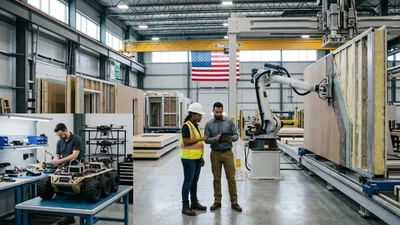
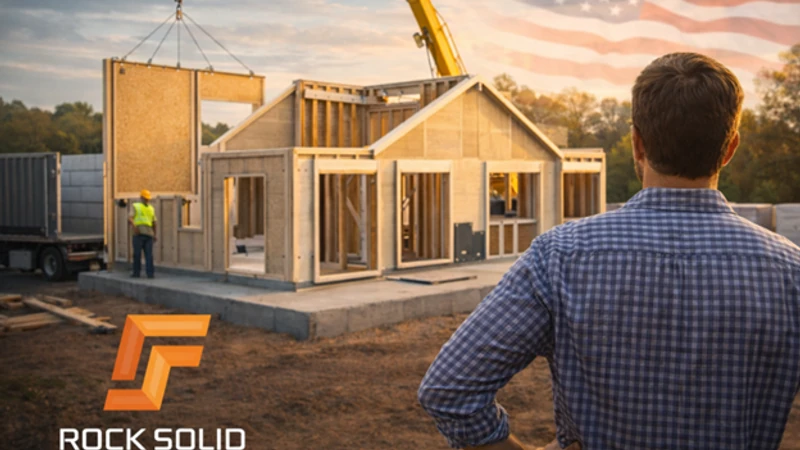
Companies like Rock Solid (www.rshpp.com) are advancing building systems that improve structural integrity while accelerating construction timelines. Through engineered panelized components and controlled manufacturing processes, critical portions of the building envelope can be produced off-site, improving precision and reducing on-site delays.
Industrialized construction methods can:
- Compress build cycles
- Improve structural performance in extreme weather zones
- Enhance energy efficiency
- Reduce material waste
- Improve cost predictability for developers
In a nation short millions of homes, incremental gains in speed and quality compound rapidly. If municipalities, builders, and investors align around scalable, high-performance construction systems, supply expansion becomes more achievable.
Housing affordability is not just about mortgage rates. It is about how efficiently and reliably we deliver new homes into the market.
The next decade will not be defined by demand — it will be defined by execution.
The Mood of the Market
Today’s housing market feels less like a boom or bust cycle and more like a pressure chamber.
Buyers wait for rates to come down.
Sellers wait for clarity, not only on rates but increased number of buyers.
Builders push forward carefully, knowing that they need a perceived edge in vanilla market.
Investors reposition, hoarding dry powder to grab deals.
No crash. No euphoria. Just constraint.
The Bottom Line
America does not have enough housing in the places that matter most — and what exists is often misaligned with first-time buyer affordability.
Home sales are subdued but stable. Corporate landlords are strategic and concentrated. Builders are innovating. Companies like Rock Solid are pushing construction methods forward. Young families are recalculating timelines.
The housing market in 2026 is not broken. It is constrained.
And until supply meaningfully accelerates — in both quantity and quality — constraint will remain the defining feature of the American housing story