There is a familiar script that plays whenever conflict erupts in a strategically important region: markets tremble, headlines scream, and pundits warn of cascading collapse. And yet, quietly—almost impolitely—capital keeps making money.
The war involving Iran is no exception. In fact, it may be one of the clearest modern examples of a truth investors rarely say out loud: markets are not moral instruments. They are adaptive systems. They do not mourn events—they reprice them.
And right now, they are repricing the world.
War Doesn’t Stop Markets. It Redirects Them.
The immediate effects are obvious enough. Oil spikes. Shipping routes become uncertain. Volatility returns to screens that had grown perhaps a little too calm.
But those are surface-level reactions. The deeper shift is more structural—and more enduring.
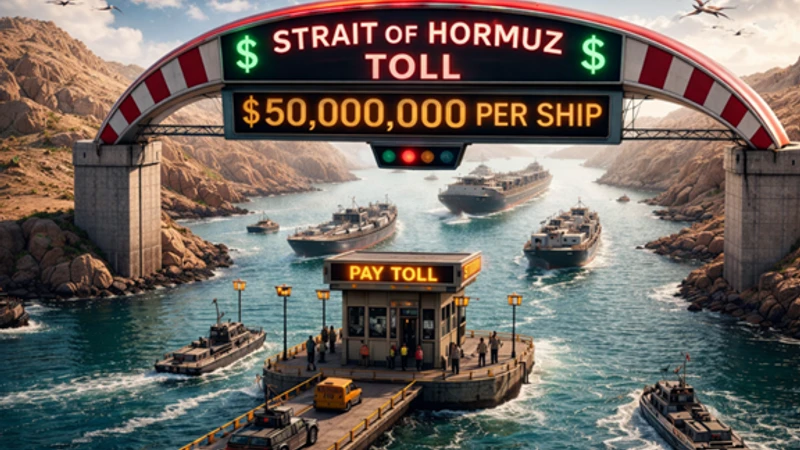
The conflict has exposed something investors already suspected but had grown comfortable ignoring: the global economy is still deeply dependent on fragile chokepoints. The Strait of Hormuz is not just a geographic feature; it is a reminder that globalization, for all its sophistication, still hinges on a few narrow passages and a handful of political relationships.
Markets don’t like that kind of dependency. So they begin to pay for alternatives.
The First Trade Is Obvious. The Second Trade Is Smarter.
There is, of course, the predictable rotation into energy and defense. Oil producers are printing cash. Defense contractors are seeing order books swell. If history is any guide, these trades will continue to work—until they don’t.
There’s a certain grim consistency to it all. In moments of uncertainty, humanity invests heavily in two things: securing energy and preparing for conflict. It’s not a particularly uplifting insight, but it is a reliable one.
Still, the more interesting capital flows are happening just beneath the surface.
Because the real takeaway from this conflict isn’t simply that oil can spike—it’s that the world doesn’t want to be this exposed again.
And that realization is driving a second, more strategic wave of investment.
The Quiet Rebuild: Investing in Independence
If you follow the money—not the headlines—you start to see a pattern.
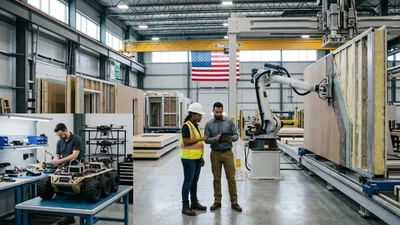
Governments and corporations alike are accelerating spending on anything that reduces reliance on unstable regions. That includes renewable energy, nuclear power, grid infrastructure, and domestic manufacturing capacity. It includes automation technologies that allow production to move closer to home without exploding labor costs. It includes strategic commodities—copper, lithium, uranium—that underpin an electrified, decentralized energy system.
In other words, the global economy is beginning, slowly and unevenly, to rebuild itself around resilience rather than efficiency.
This is not a small shift. For decades, markets rewarded optimization: lowest cost, fastest route, leanest supply chain. Now they are rewarding redundancy.
And redundancy, while less elegant, tends to be more durable.
Meanwhile, the Machines Keep Winning
If there is one area of the market that seems almost indifferent to geopolitics, it is the ongoing surge in artificial intelligence and automation.
That indifference is misleading.
In reality, conflict reinforces the case for these technologies. A world defined by labor shortages, political fragmentation, and rising costs is a world that leans more heavily on software and machines. Algorithms don’t worry about sanctions. Robots don’t require relocation packages.
One investor quipped recently that while geopolitics grows more chaotic, “servers remain refreshingly obedient.” It’s a joke, but like most good jokes, it contains a useful truth.
The long-term winners in this environment are not just those exposed to war, but those insulated from it.
A Market Built on Resilience
What emerges from all of this is a subtle but important shift in how investors think about opportunity.
The traditional frameworks—growth versus value, cyclical versus defensive—are still relevant, but they are being supplemented by a new lens: fragility versus resilience.
Resilient assets share certain characteristics. They are less dependent on single points of failure. They benefit from decentralization. They often provide a hedge against inflation or supply disruption. Infrastructure, certain commodities, parts of the energy transition, and even segments of the technology stack all fit this description.
This doesn’t mean volatility disappears. Far from it. In fact, volatility is likely to be a defining feature of markets shaped by geopolitical tension.
But volatility, for investors willing to look past the noise, is also a source of opportunity.
“Markets don’t bet on war—they bet on what the world looks like after it.”
The Temptation to Chase the Obvious
Every crisis creates its own set of “too obvious” trades. Right now, those include oil, defense, and anything with a headline-friendly connection to conflict.
The danger, as always, is timing. By the time a theme becomes widely discussed, much of the easy money has already been made. That doesn’t mean the trade is over—but it does mean the margin for error shrinks.
Meanwhile, less obvious opportunities—grid modernization, nuclear energy, industrial automation—tend to receive less attention precisely because they are less dramatic. They do not make for compelling television segments. They do, however, make for compelling long-term investments.