The old-guard macro analysts are clutching their pearls, waiting for the "inevitable" crash that usually follows a middle-eastern powder keg. They’re looking for the 1973 oil shock in a 2026 world. They’re wrong.
As the blockade around Iran tightens, the markets aren’t just holding steady—they’re screaming higher. Why? Because for the first time in a century, a crisis in the Strait of Hormuz doesn't mean a heart attack for the American economy. It means a massive, forced transfer of wealth and energy dominance back to the Western Hemisphere.
We aren't watching a catastrophe; we’re watching the final decoupling. This isn't a "fear index" moment—it’s a "conviction index" moment. For the American investor, the blockade is less of a wall and more of a launchpad.
"The world used to hold its breath when the Persian Gulf coughed. Today, America just buys the dip and builds more rigs. The 'Hormuz Tax' is now a dividend for the domestic producer."
The Chaos Arbitrage
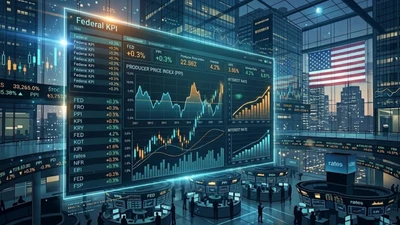
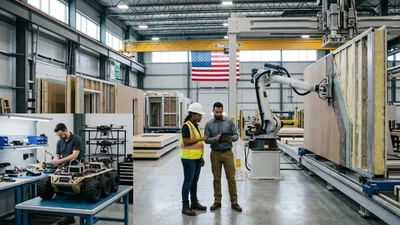
While the media focuses on the "spectacle" of naval maneuvers, the smart money is looking at the scoreboard. The S&P 500 isn't rising despite the war; it’s rising because the war is acting as a brutal, high-speed filter. It is filtering out the fragile, energy-dependent legacy players and pouring gasoline on the fire of American industrial and energy sovereignty.
If you’re waiting for the "dip" to buy, you might miss the moon mission. The market has realized that the U.S. is now the ultimate safe haven—an island of energy, food, and tech security in a world that just lost its primary gas station.
The Bottom Line
The blockade has fundamentally changed the math. The "Fear Factor" has been replaced by the "Fortress America" factor. It’s going to be a wild, profitable, and historically significant ride.
Strap in. The new era of energy independence isn't coming—it's already here, and it’s paying dividends.
Are you positioned for the "Fortress America" trade, or are you still hedged for a world that no longer exists?