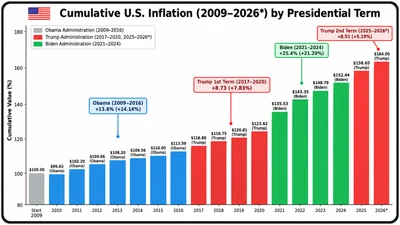
For months, Wall Street’s dominant narrative has felt like a broken record: structural deficits are rising, global currency debasement is accelerating, and geopolitics are forcing a structural realignment of capital. But as we look at the trading board today, a major divergence has formed between long-term macro fundamentals and short-term market positioning—and it’s a setup that savvy investors need to watch closely.
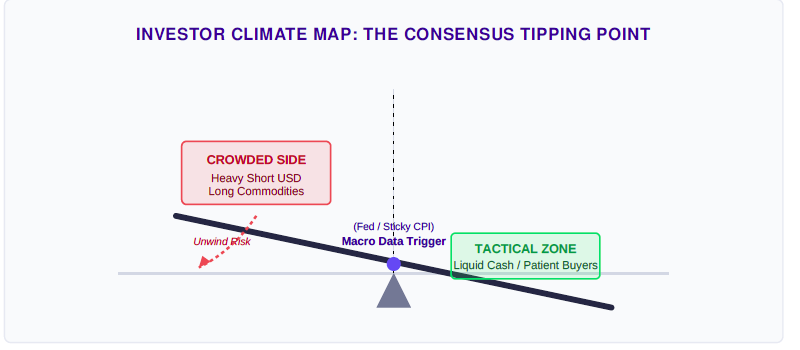
If you read our Monday brief, you know that the most crowded short position on Wall Street right now isn’t a speculative tech sector or an overextended S&P index. It’s the U.S. dollar. Speculators have piled into consecutive weeks of heavy dollar selling, and institutional asset managers have flipped to a net-short DXY (U.S. Dollar Index) position. The macro-consensus has become completely unified: bet on a weaker dollar, accumulate hard commodities, and ride the tailwinds of monetary inflation.
But in a market where everyone is leaning to one side of the boat, the smart money looks for the tipping point. Here is what you should be watching today and how to navigate these conditions.
What to Watch: The Mechanics of the "Pain Trade"
When a narrative becomes consensus, it creates an asymmetric risk profile. Because the market is heavily shorting the greenback, any unexpected economic data—whether a stickier inflation reading, resilient labor metrics, or hawkish commentary from the Federal Reserve—can trigger a massive short squeeze.
If the dollar catches a sudden bid, the highly leveraged momentum trades built against it will unwind fast. This is the definition of the "pain trade" of 2026. It doesn’t mean the long-term thesis of dollar debasement is wrong; it means the entry points matter now more than ever.
How to Take Advantage of Today’s Market Conditions
1. Avoid the Momentum Trap; Wait for the Squeeze: Chasing commodities, gold, or international equities at the absolute peak of a dollar-selling cycle exposes you to unnecessary drawdown risk. Instead, treat short-term dollar strength as a buying opportunity. When a data releas triggers a sudden, temporary spike in the DXY, use that liquidity event to accumulate the hard assets you want to hold for the next 3–5 years at a discount.
2. Watch the Mining Re-Rating (Silver vs. Gold): As institutional capital looks for ways to play the broader commodity boom, we are starting to see a structural shift. Silver miners, in particular, are beginning to outperform gold miners. This outperformance is being driven by twin engines: traditional monetary debasement protection and massive industrial demand stemming from the global artificial intelligence infrastructure build-out and green energy hardware. Look for quality, high-margin producers that have survived the previous cyclical bear market.
3. Run a Balanced Liquidity Playbook: In a volatile macro environment, "cash is trash" over a decade, but cash is a strategic weapon over a quarter. Keeping a portion of your portfolio liquid allows you to capitalize on the exact forced-selling events that occur when crowded macro trades get caught off-guard.
The Bottom Line: The long-term macro trend favors tangible assets, industrial metals, and hard money. But today, structural success requires tactical patience. Let the crowded trades flush out, and be ready to step in when the market overcorrects.