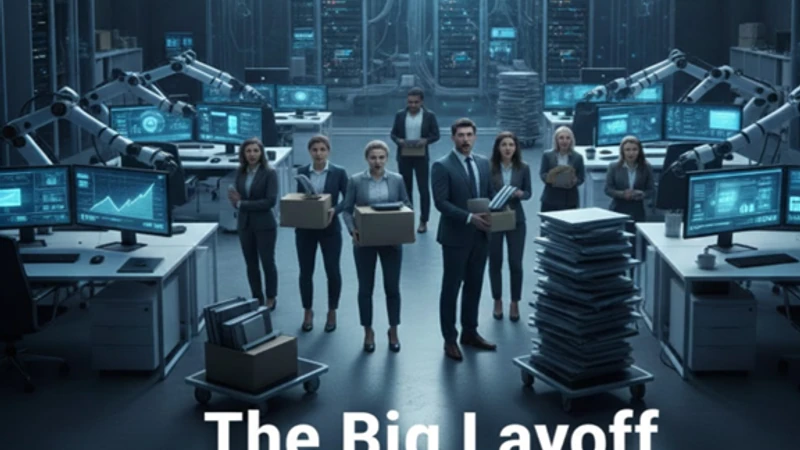
IBM just announced 1,000 layoffs tied to AI automation. It’s a headline that’s likely to make some people nervous — but for investors, the reality is more nuanced. AI is reshaping how companies operate, and the markets are already pricing in the efficiency gains. The question is: how does this affect the broader U.S. economy?
“AI boosts productivity fast — but the economic bill always shows up later.”
At a glance, AI is exactly the kind of productivity boost Wall Street loves. Companies can produce more, cut costs, and improve margins. That translates directly into earnings — and markets respond to earnings. In the short term, layoffs like IBM’s can actually be a bullish signal: businesses are trimming inefficiencies and investing in tools that drive growth.
At the same time, there’s a macro angle that the Fed is watching closely. A slight cooling in the labor market can be helpful for inflation. As companies automate, wage pressure softens, and inflation becomes a little easier to manage. That gives the Federal Reserve breathing room, and investors generally like an economy where rates can stabilize or even come down.
But it isn’t all upside. The reality is that AI-driven layoffs hit mid-skill roles first — the administrative, back-office, and IT positions that form the backbone of the middle class. If the pace of automation accelerates, consumer spending could soften. Retail sales, travel, leisure, and even housing demand all depend on a stable middle-income base. The U.S. economy isn’t built to run purely on productivity gains; it needs consumers with money to spend.
Some industries will clearly benefit more than others. Cloud and AI infrastructure, cybersecurity, automation software, and high-margin service firms are positioned to thrive. Labor-heavy industries and companies slow to adopt automation will feel the pressure. Investors will reward companies that move decisively and penalize those that resist change.
Even modest layoffs ripple outward. They are unlikely to trigger a recession on their own, but if AI adoption accelerates and more middle-skill jobs disappear, the economic drag could become noticeable over time. That’s why investors need to watch not just the headlines, but the second-order effects: slower consumer growth, a stretched middle class, and the eventual political response.
Bottom line: AI layoffs are a short-term win for corporate efficiency and earnings, but they carry a longer-term risk to consumer demand and economic stability. For now, markets are cheering productivity gains. Eventually, though, the broader economic bill will arrive, and investors will need to pay attention.