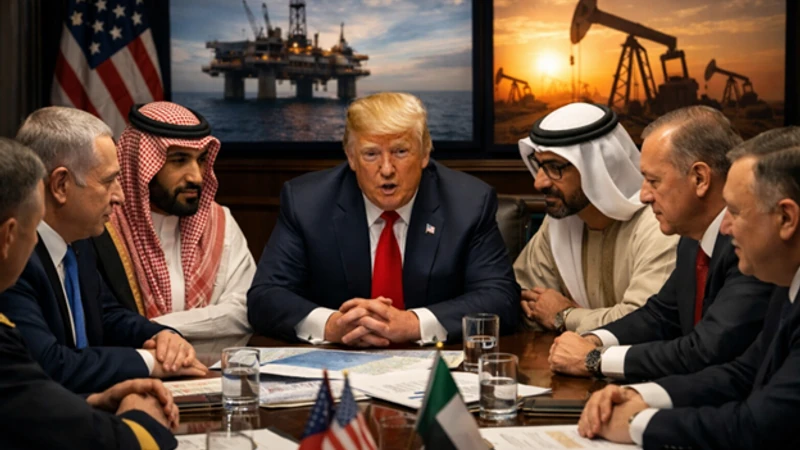
After a week of relative calm following the launch of Trump’s rebuilding framework for Gaza, a larger strategic question is coming into focus: Could Trump and his allies wall off Iranian oil from the global market without creating a negative impact on the global economy?
Oil markets are interconnected and highly sensitive to perception. Remove supply too abruptly and prices spike. Trigger instability and markets price in risk even faster than they price in shortages. Completely isolating Iranian oil without some global economic effect is extremely difficult. But marginalizing it without causing a global economic blip is possible—if it is done methodically, predictably, and in coordination with allies.
That is where Trump’s new alliances matter.
Iran exports roughly 1–2 million barrels per day under varying enforcement conditions. In a global market that consumes more than 100 million barrels per day, that volume is significant but manageable—if replacement supply is secured before pressure is applied. The key is not sudden removal. The key is structured substitution.
If Trump’s strategy aligns closely with Gulf producers such as Saudi Arabia and the UAE, real spare capacity can be positioned to offset Iranian barrels. Markets do not panic when they believe supply is covered. They panic when uncertainty dominates. By lining up replacement production in advance and signaling that the system remains balanced, volatility can be contained before it accelerates.
But the bigger threat is not the barrels themselves—it is escalation risk.
Markets price geopolitical instability almost instantly. Any perceived threat to shipping lanes or regional spillover would add a risk premium to oil prices far faster than sanctions alone would. Preventing that premium from forming is essential. Strong maritime coordination, disciplined signaling that enforcement is targeted rather than escalatory, and steady diplomatic backchannels are what keep energy markets calm.
In this framework, the objective is not dramatic disruption. It is controlled marginalization.
There is also a more sophisticated way to apply pressure. Rather than abruptly eliminating volume from the market, enforcement can focus first on revenue compression—tightening shipping networks, insurance channels, and financial pathways in ways that reduce Iran’s earnings before aggressively cutting off physical supply. Weakening revenue before removing volume softens the inflationary impact while still achieving strategic leverage.
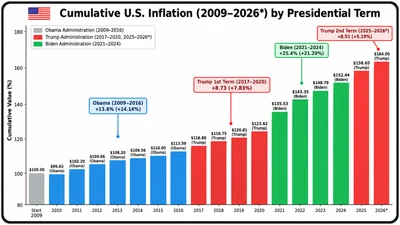
This approach strengthens America in three ways. First, it restores energy leverage without weaponizing scarcity. Second, it reinforces new regional alliances by positioning the United States as a stabilizing coordinator rather than a destabilizing disruptor. Third, it protects domestic economic stability by avoiding the fuel price spikes that translate quickly into inflation and political blowback at home.
“The goal is not to shock the oil market. The goal is to marginalize Iranian leverage while keeping global supply steady and risk contained.”
If replacement supply is credible, if reserves are used tactically rather than recklessly, and if escalation is carefully managed, the global economy does not need to take a significant hit. Oil prices may adjust modestly. Markets may recalibrate. But a full-scale inflationary surge or recessionary shock can be avoided.
Oil is fungible. Markets are global. But alliances, when structured correctly, can absorb disruption before it becomes crisis.
Marginalizing Iranian oil is not simply an energy move. It is a geopolitical recalibration. Done recklessly, it would ripple through inflation, trade balances, and growth. Done strategically, it could demonstrate that American power—paired with preparation and partnership—does not have to produce panic.