Markets don’t usually move on one thing alone. They move when several fault lines shift at once — policy, politics, capital rotation, and sentiment. Today is one of those days. Here’s what matters, and why investors should be paying attention.
The Jobs Number That Sets the Tone
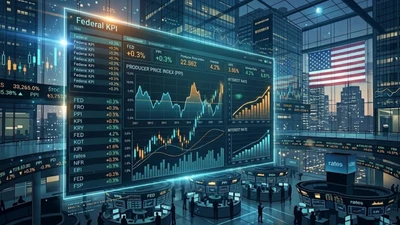
The December Non-farm Payrolls report is doing more than telling us how many jobs were added. It’s shaping the next chapter of the Federal Reserve narrative.
A cooling labor market gives the Fed room to ease. A resilient one keeps rates higher for longer. Equity markets are reacting less to the headline number and more to what it implies about the rate path in 2026. Softer employment growth tends to buoy growth stocks and risk assets. Stronger-than-expected data pushes yields up and compresses valuations.
This report isn’t about the past month — it’s about the Fed’s next move.
A Supreme Court Ruling With Market Consequences
Investors don’t often watch the Supreme Court ticker, but today they are.
A ruling tied to presidential tariff authority could reset assumptions around trade, executive power, and future economic policy. Even the hint of constrained tariff powers may calm global markets. The opposite result injects fresh uncertainty into supply chains, pricing power, and corporate margins.
Markets dislike ambiguity more than bad news — and this ruling has the potential to deliver both clarity or chaos.
The Quiet Rotation Beneath the Indexes
While the S&P grabs headlines, capital is quietly moving underneath it.
We’re seeing sector rotation away from crowded tech trades and toward defense, industrials, and cyclicals. This isn’t an anti-tech call — it’s a rebalancing. Investors are hedging geopolitical risk, policy uncertainty, and fiscal expansion by owning companies tied to hard assets, national security, and real-world production.
Defense spending expectations matter. Infrastructure matters. Cyclicality matters again.
When leadership changes quietly, it often sticks longer than expected.
Bitcoin Faces Its Macro Moment
Bitcoin is no longer trading in isolation.
Today’s macro catalysts — jobs data, policy uncertainty, and risk appetite — are colliding with key technical resistance levels. That makes crypto particularly sensitive to cross-asset flows. A risk-on interpretation fuels momentum. A spike in yields or volatility pulls liquidity back to the sidelines.
Crypto investors should watch how Bitcoin reacts, not just where it trades. Resilience in a choppy macro environment sends a powerful signal.
Oil, Energy, and the Geopolitical Undercurrent
Oil prices are once again reminding markets that energy never stays boring for long.
Geopolitical tensions, supply constraints, and regional instability are influencing price action — and with it, inflation expectations. Energy costs ripple through everything: transportation, manufacturing, consumer prices, and ultimately monetary policy.
Energy stocks may benefit in the short term, but the broader impact shows up in bond yields and central bank calculus. Ignore oil at your own risk.
The Bottom Line
Today isn’t about one data point or one ruling. It’s about how multiple narratives converge:
- Labor markets shaping Fed expectations
- Courts influencing trade policy
- Capital rotating beneath the surface
- Crypto reacting as a macro asset
- Energy reminding us geopolitics still matter
Markets are recalibrating in real time. Investors should be watching not just the moves — but the message behind them.
Because when everything moves at once, something important is usually changing.