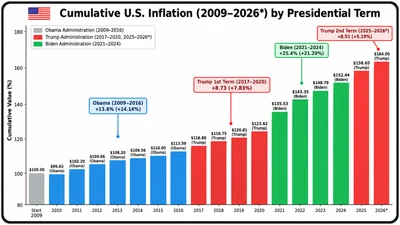
The financial calendar for this week (December 1-5, 2025) is not for the faint of heart. After the holiday pause, investors face a gauntlet of critical economic reports and key political maneuvers that could determine the trajectory of the market into year-end. For the investor focused on fiscal discipline, corporate growth, and monetary stability, the core mission remains unchanged: track inflation, scrutinize labor costs, and monitor Washington D.C. for signals on tax and regulatory policy.
Here is your daily guide to the vital data points and political developments that matter most.
Monday, December 1: The Manufacturing Meter and the Fed Chair
The week begins with two pillars of market guidance: industrial health and monetary policy direction.
- Manufacturing Pulse: The ISM Manufacturing PMI is released at 10:00 AM EST. A reading above the key 50-level is a sign of industrial expansion—a crucial indicator for the cyclical, material, and energy stocks that thrive in a pro-business environment. We need to see sustained strength in the U.S. industrial base, not just the service sector.
- Construction Spending: This data point reflects real-economy capital investment. Strong figures are a green light for infrastructure-related companies and suggest businesses are confident enough to invest in expansion.
- Powell on the Wire: Fed Chair Jerome Powell's speech (evening) will be scrutinized for any shift in the central bank's stance. Investors are hoping for signals that the battle against inflation is won, allowing the Fed to move away from restrictive rate policy without destabilizing the economy.
Tuesday, December 2: Political Tailwinds and the Labor Crunch
Mid-week attention shifts to Washington, where political developments can create swift sector-specific opportunities or risks.
- GOP Policy Watch: Keep an eye on the House floor and Republican meetings for movement on key bills, such as the SCORE Act (collegiate athletics), and discussions around future tax policy, including the mechanics of programs like "Trump accounts" aimed at fostering new capitalists. Legislative risk is often investment risk—or opportunity.
- The Labor Cost Conundrum: The JOLTS Job Openings report provides insight into the supply/demand balance for labor. While a strong number suggests job security, an excessive number of openings points to a persistent labor shortage, which fuels wage inflation and pressures corporate margins. A gradual cooling is necessary for corporate profit health.
- Delayed Retail Sales: A late snapshot of consumer spending from November will confirm if the high-income consumer is still driving the market, or if the broader public is pulling back due to sustained prices.
Wednesday, December 3: Private Employment and Key Earnings
This is a day for a deep dive into corporate performance and the health of the non-manufacturing economy.
- The Jobs Barometer: The ADP Employment Survey is the most widely watched private-sector jobs indicator ahead of Friday’s official report. A balanced reading—growth without acceleration—is ideal.
- Services Sector Strength: The ISM Services PMI must be watched closely. As the largest part of the U.S. economy, sustained strength here is crucial, though it also carries the largest inflation risk.
- Earnings Spotlight: We get a pulse check on technology and retail: Salesforce (CRM) and Snowflake (SNOW) will reveal the enterprise spending environment, while a major retailer like Macy's (M) gives clarity on consumer discretionary spending heading into the holidays.
Thursday, December 4: Real-Time Layoffs and Global Trade
The focus returns to fundamental economics—the labor market's stability and the state of global commerce.
- The Layoff Indicator: Initial Jobless Claims provides the most current data on the pace of layoffs. A low, stable reading signals business confidence and a healthy employment floor.
- Trade Deficit: Republican investors are often wary of trade imbalances. The latest figures on the U.S. Trade Deficit will be monitored for the need for new trade policies or tariff actions, which can impact multi-national supply chains and specific industrial sectors.
- Fed Commentary: Another opportunity for clarity on the path of bank supervision and interest rates from Fed Vice Chair Michelle Bowman.
Friday, December 5: The Grand Finale—The Fed's Favorite Gauge 🎯
The week culminates with the single most important inflation report for the Federal Reserve.
- The PCE Deflator: The Personal Consumption Expenditures (PCE) Index and its core reading are the Fed’s preferred measure of inflation. Investors must watch the Core PCE Deflator (year-over-year). A decline below expectations will significantly boost market confidence, easing rate concerns and potentially fueling a late-year rally. This data point is arguably the most influential of the entire week.
- Consumer Health: The final Personal Income and Spending reports (delayed) will confirm if consumers are using wage gains or depleting savings to maintain spending, offering a fuller picture of household financial stability.
The Investor’s Takeaway
This week is a test of the soft landing theory. For the Republican investor, the most desired outcome is data that shows a robust, growing economy (strong ISM, decent jobs) without the inflationary baggage (low Core PCE). The combination of a strong corporate earning environment and a softening-but-stable labor market, validated by benign PCE data, would confirm that the current pro-growth, anti-inflationary policies are working. Be prepared to act on Friday's PCE numbers—they will dictate the final sentiment of the year.