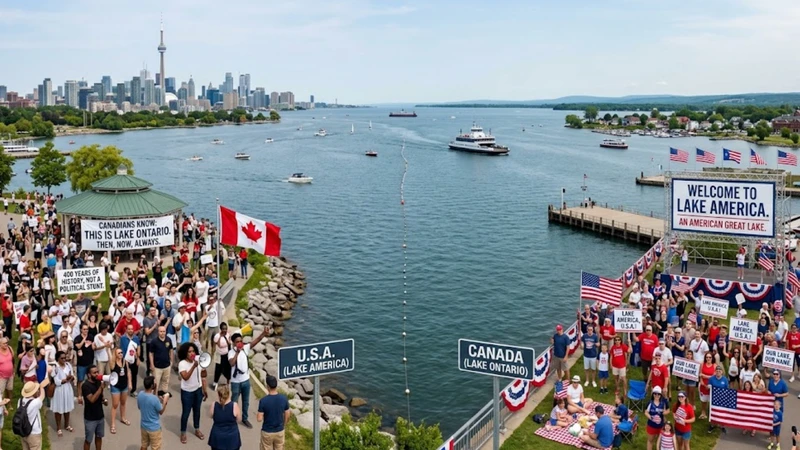
If you thought the map of North America was settled, think again. This week, President Trump signed an executive order officially renaming Lake Ontario to "Lake America" on U.S. maps and federal databases.
But behind the geographic rebranding lies a very real, escalating trade feud between the U.S. and its northern neighbor. Here is a breakdown of what happened and why Wall Street is paying attention as we head into next week.
🍁 The Beef Behind the Rebrand
The "Lake America" executive order is just the latest headline in a ballooning U.S.-Canada trade war. Frustrated by trade deficits and agricultural tariffs, the Trump administration recently slapped 50% tariffs on roughly $20 billion worth of Canadian imports. The list of targeted goods includes everything from dairy and whiskey to toys and hockey sticks.
In response, Canadian Prime Minister Mark Carney (who flatly rejected the lake's name change) promised to retaliate "dollar for dollar," announcing new tariffs of up to 50% on hundreds of American goods.
📉 What Investors Need to Watch Next Week
As the rhetoric heats up, market watchers should keep an eye on a few critical sectors feeling the squeeze:
The Auto & Steel Industries: Ontario isn't just home to a newly-contested lake; it's the beating heart of Canada's auto industry. With threats of fresh 50% tariffs on Canadian vehicles, auto parts, and steel, automakers and manufacturers with cross-border supply chains could see major cost spikes.
Agriculture & Dairy: Trump specifically called out Canadian tariffs on U.S. farmers as a driving force behind the feud. While the vast majority of U.S. agricultural exports enter Canada duty-free, over-quota dairy items have historically faced steep tariffs. Retaliatory moves could squeeze U.S. farmers and food distributors.
The September 8th Deadline: Canada's retaliatory tariffs are officially slated to kick in on September 8th. Next week will be crucial as investors watch to see if any back-channel negotiations can defuse the situation, or if both nations will dig in their heels.
The Bottom Line: While mapmakers figure out how to label the Great Lakes, investors should be mapping out the potential impacts on their portfolios. If you have heavy exposure to cross-border manufacturing, autos, or agriculture, brace for some choppy waters on Lake America.