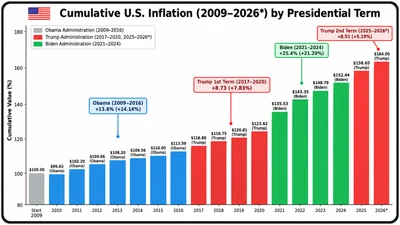
For a Republican investor looking toward 2026, the landscape is defined by the "America First" economic agenda entering its second phase. With President Trump in the White House and the legislative victories of 2025 (specifically the extension of the Tax Cuts and Jobs Act provisions) largely secured, 2026 will be about capitalizing on deregulation and navigating the inflationary side effects of protectionist trade policy.
Here is a strategic planning guide for 2026, tailored to a conservative investment philosophy and the current policy environment.
1. Tax Strategy: Optimizing the "One Big Beautiful Bill"
The legislative priority in 2025 was avoiding the "tax cliff." For 2026, your focus shifts to utilizing the new permanent provisions of the tax code.
- Estate Planning Window:The extension of the doubled estate tax exemption (approx. $15M per individual / $30M per couple) is likely permanent or extended long-term.
- Action: If you paused aggressive gifting strategies in 2024 fearing a rollback, you now have security. Focus on Generation-Skipping Trusts (GST) to lock in dynastic wealth transfer without fear of immediate sunset provisions.
- SALT Deduction Cap Management:Be aware of changes to the State and Local Tax (SALT) deduction. Recent legislation (often referred to in financial circles as the "One Big Beautiful Bill") effectively raised the SALT cap temporarily (e.g., to $40,000 for 2026–2029) before reverting.
- Action: If you live in a high-tax state (blue state), 2026 is a prime year to maximize deductions that were previously capped at $10,000.
- "Trump Accounts" for Next Gen:If the administration's "Baby Bonus" or "Trump Account" provisions were enacted (tax-advantaged savings for children born after 2025), this creates a new vehicle for intergenerational wealth transfer.
- Action: Review eligibility for any new family additions; these accounts often function like "Super 529s" with broader investment freedom.
2. Sector Allocation: The "America First" Portfolio
The administration’s clear winners are sectors that benefit from deregulation, tariff protection, and re-militarization.
- Aerospace & Defense (Strong Buy):Geopolitical instability combined with a "Peace Through Strength" doctrine means defense budgets remain effectively uncapped.
- Focus: Look beyond the prime contractors (Lockheed, RTX) to defense tech and space (e.g., companies modernizing missile defense, drones, and satellite constellations).
- Traditional Energy & Nuclear:The "Drill Baby Drill" mandate is in full effect. While oil price volatility is a risk, regulatory headwinds have vanished.
- Focus: Midstream pipelines (easier permitting) and Nuclear energy. The administration views nuclear as the only baseload power capable of supporting the AI data center boom without carbon constraints.
- Domestic Manufacturing (Reshoring):With tariffs on imports likely remaining high or increasing in 2026, domestic producers with US-based supply chains have a pricing advantage.
- Focus: Automation and robotics companies that help US factories compete on labor costs.
3. Macro Risks: The "Tariff Inflation" Trade-off
The biggest risk to your portfolio in 2026 is not a recession, but sticky inflation (hovering around 3-4%) caused by tariffs and tight labor markets.
- Interest Rate Outlook:Do not expect rates to return to zero. The Fed will likely be pressured to cut rates to support growth, but inflation will keep a floor under them (likely settling in the 3.5% - 4% range).
- Action: Avoid long-duration bonds (10-30 year Treasuries) which suffer when inflation lingers. Prefer Floating Rate Notes or Private Credit strategies that yield 8-10% in a mid-rate environment.
- Gold & Commodities: As a hedge against the fiscal deficit and potential currency debasement from aggressive trade wars, hard assets remain a staple of the Republican portfolio.
4. The 2026 Midterm Election Cycle
2026 is a midterm election year. History suggests a specific pattern you should trade around:
- Q2/Q3 Volatility: Markets often chop sideways or dip in the summer/fall of midterm years due to uncertainty about Congress.
- Q4 Rally: Once the election is decided (regardless of the winner), markets typically rally on the removal of uncertainty.
- Political Play: If Republicans hold Congress, expect a push for further capital gains tax reductions. If Democrats gain ground, legislative gridlock will likely freeze current policy in place—which markets generally like.
Summary Checklist for 2026
- Review Trusts: Ensure estate plans utilize the confirmed high exemption limits.
- Reallocate Equities: Overweight Defense, Nuclear/Fossil Energy, and Domestic Industrials.
- Inflation Hedge: Maintain exposure to commodities or real estate to buffer against tariff-induced price hikes.
- Crypto Exposure: Ensure you have some exposure to digital assets; the regulatory environment is now actively supportive rather than hostile.