Markets are entering Wednesday with three storylines in play: how the U.S. economy is absorbing tariffs, what tone the Fed sets on inflation, and whether technology earnings can keep momentum alive. The combination makes this a pivotal midweek test for both Wall Street and Main Street.
PMIs Signal the Tariff Divide
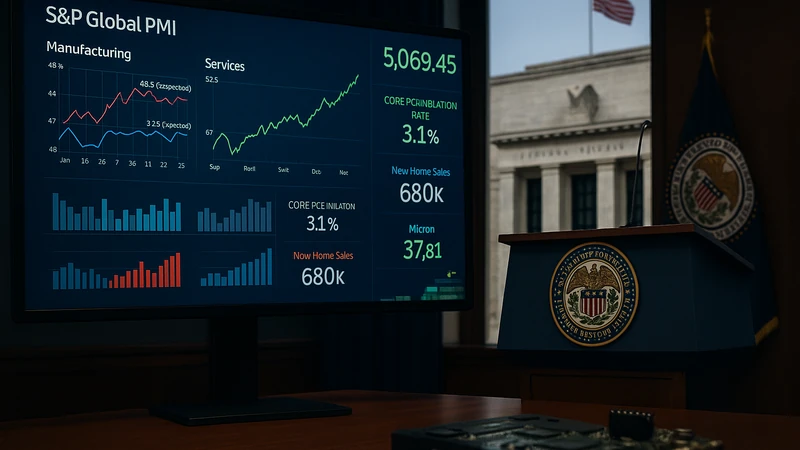
Manufacturing activity is expected to remain in contraction territory. A reading below 50 highlights that tariffs are hitting factory demand and supply chains.
Services, on the other hand, are holding above the expansion line. Strong consumer activity continues to offset industrial pain, keeping overall growth steady.
The real tell will come from new orders and employment components — those will show whether weakness is contained or spreading.
Why it matters: For Republicans, this split underscores the strength of the American consumer, even as global trade fights weigh on industry.
Housing Stays in Focus
The housing market has been a stabilizer through recent volatility.
Healthy demand for new homes signals that families remain confident and financially resilient, even in the face of higher borrowing costs.
A slowdown, however, would suggest that inflation and rates are finally biting deeper into the middle class.
Why it matters: Housing is the clearest read on middle-America’s financial health. A steady market gives campaigns cover to argue that families are weathering economic storms better than critics admit.
Powell’s Tightrope Act
The Fed chair will be pressed to acknowledge tariff-driven inflation pressures. With core inflation still projected above target into 2025, he has little room to sound dovish.
Politics hang over every word. Trump’s feud with the Fed and his new nominee, Adrian Miran, set up a clash between calls for aggressive rate cuts and Powell’s cautious stance.
Investors want clarity: will the Fed prioritize stability or bow to mounting pressure for stimulus?
Why it matters: This speech will be parsed not just by traders but by political strategists, as monetary policy is once again becoming a campaign issue.
Micron’s Earnings Test
Micron has faced scrutiny from China but remains positioned as a critical supplier in the AI chip boom.
A strong report would validate the thesis that tariffs, while painful in the short term, accelerate reshoring and strengthen American semiconductor leadership.
Investors are looking for signs of 5–10% upside on the back of AI-driven demand.
Why it matters: Tech strength gives conservatives a case study in why reshoring works: tariffs create pain upfront, but open long-term opportunities for U.S. industry.
The GOP Take
PMIs: Weak factories = tariff costs, but strong services = consumer resilience.
Housing: A steady housing market supports the case that families are adapting.
Powell: His balancing act mirrors Trump’s pressure campaign against the Fed.
Micron: Semiconductors highlight the payoff of reshoring — a national security and economic win.
The Play
Micron calls remain the trade. AI strength and tariff reshoring could deliver meaningful upside on earnings.
Defense stocks could also get a lift if Trump doubles down on “unfair EU trade” in his midweek messaging.
Watch services data as the swing factor — it will decide whether investors lean into risk or pull back.