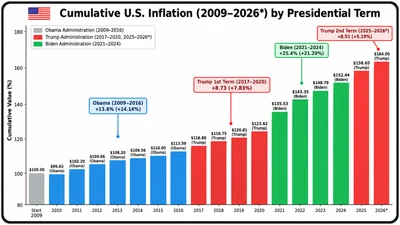
The global economy has spent the first half of 2026 reeling under severe energy shocks and supply chain chaos. Following the outbreak of conflict earlier this year and Iran’s subsequent tightening of a maritime chokehold on the Strait of Hormuz, the international market faced what the International Energy Agency (IEA) dubbed the "greatest global energy security challenge in history". With a massive chunk of the world's oil supply and vital liquefied natural gas (LNG) volumes frozen or heavily restricted, Brent crude spiked, triggering inflation, postponing central bank interest rate cuts, and threatening widespread stagflation.
However, the economic narrative is shifting rapidly. Recent announcements from the White House indicate that a major diplomatic framework or peace agreement between Washington and Tehran is on the horizon. While a final signature is still pending and Iranian officials caution that red lines remain, the mere prospect of an agreement has already sent oil prices tumbling back down from their wartime peaks.
If finalized, the proposed negotiation framework—which pairs a timeline for demining the Strait of Hormuz with complex discussions surrounding frozen assets and a massive economic recovery package—promises to fundamentally reshape the global macroeconomic landscape.
1. The Revelation of the "Secret Supply Line"
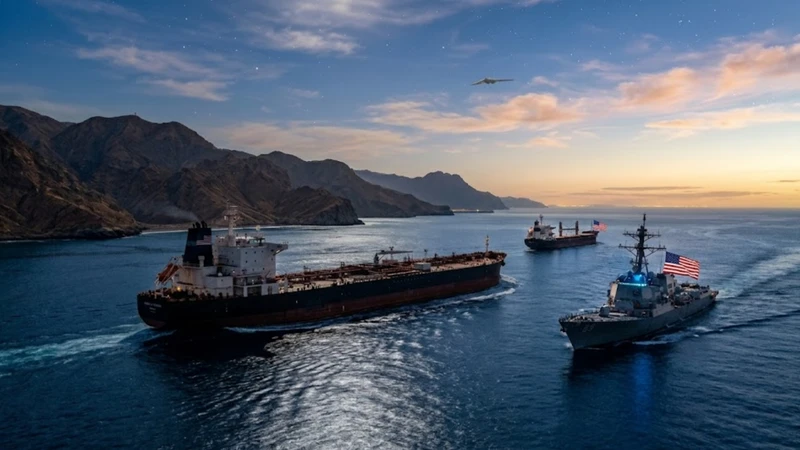
The economic outlook completely transformed following President Trump's surprise disclosure from the Oval Office. In a sharp rebuke to the media, the President revealed that the U.S. military has spent weeks quietly executing a "secret mission" to shepherd commercial vessels through the blockaded channel. Trump noted that the operation moved over 200 commercial ships and 100 million barrels of oil into the open market, stating that "nobody knew—not even the fake news knew it".
Maritime intelligence reports have since shed light on these "shadow transits". Running under total electronic secrecy, tankers blacked out their navigation lights, turned off their Automatic Identification System (AIS) transponders, and hugged the Omani coastline under the cover of night while U.S. forces utilized drones, aircraft, and autonomous vehicles to provide overwatch.
This revelation explains a major macroeconomic anomaly from the past month: why global financial systems hadn't completely collapsed under a seemingly airtight blockade. The market was already quietly absorbing a steady leak of "ghost" oil.
2. Breaking the Energy Blockade Systematically
While the secret U.S. mission acted as a vital economic safety valve, running 15 to 17 "dark transits" a night is a fraction of normal capacity. Pre-war traffic regularly saw upwards of 120 to 140 vessels daily.
The primary economic value of a finalized deal is the structured, legal reopening of the Strait of Hormuz. The draft framework outlines an official timeline for demining the waterway, allowing standard commercial traffic and massive Very Large Crude Carriers (VLCCs) to resume transit in broad daylight without military coordination, risk of interdiction, or blacked-out hulls. For global markets, transitioning from a covert trickle to unimpeded commercial flow will stabilize Brent crude prices and alleviate the acute energy-supply shocks hammering industrial output in Europe and Asia.
3. Easing Global Inflationary Pressure
The prolonged maritime blockade didn't just drive up prices at the gas pump; it triggered severe supply chain bottlenecks, impacted global fertilizer markets, and made food and basic necessities significantly more expensive worldwide.
By restoring normal trade routes and permanently driving down energy costs, a diplomatic breakthrough will give central banks—most notably the European Central Bank (ECB) and the U.S. Federal Reserve—the breathing room needed to safely resume planned interest rate reductions. This shift could avert the technical recessions that energy-dependent economies have been staring down for months.
4. The Price of Peace: Tehran's Economic Demands
While the global benefits of a reopened strait are clear, the financial mechanics of a final settlement carry heavy friction. Iranian state media and negotiators have pushed for a massive economic recovery package, the immediate unfreezing of restricted assets, and a suspension of energy sanctions.
The mechanism for releasing these funds remains a primary sticking point. Iran is pushing for an immediate lump-sum capital release to rebuild infrastructure damaged in recent military strikes, while the U.S. favors a phased approach strictly tied to humanitarian goods. Overcoming this economic tug-of-war, alongside intense political resistance from regional allies like Israel, remains the steepest hurdle to a final signature.
The Bottom Line
A diplomatic resolution offers a swift exit ramp from a high-inflation, low-growth trajectory. However, a deal will not instantly erase the long-term structural changes triggered by the 2026 war. Moving forward, Gulf nations are highly likely to continue investing heavily in alternative cross-peninsula export pipelines to hedge against future vulnerabilities. For now, the global market is holding its breath, betting that a finalized signature will transform a fragile, covert lifeline into permanent economic stability.