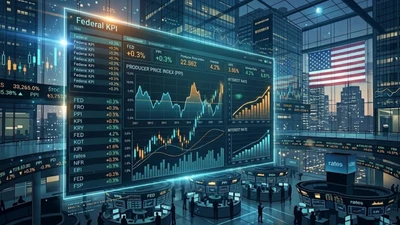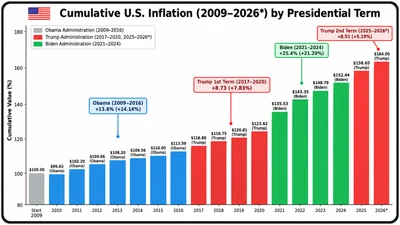
It is the great, enduring theater of the Potomac: a president stands before a bank of cameras to claim personal authorship of a rising stock index, or an opponent takes the stage to lay the soaring price of a gallon of milk directly at the feet of the Oval Office. We have been deeply conditioned to view the Chief Executive as the master pilot of the American economic engine.
But to the serious investor—the allocator of private risk capital who must look past the headline numbers to read the underlying balance sheet of the republic—this narrative is a profound misunderstanding of economic gravity.
True economic leadership is not measured by the speed with which a government can print, borrow, or distribute capital. Anyone can manufacture a temporary spike in Gross Domestic Product if they are willing to mortgage the future to buy the present. Real economic greatness lies in restraint: the disciplined cultivation of free-market certainty, the aggressive defense of the dollar, the unleashing of domestic energy, and the chilling realization that economic dominance is the ultimate foundation of national security.
The Inflationary Illusion
When Washington attempts to spend its way through a crisis, it does not create wealth; it merely redistributes it through a distorting lens. Pumping trillions of dollars of artificial liquidity into a supply-constrained global economy acts like a massive dose of adrenaline to a patient who actually requires structural surgery.
For the modern fiduciary, the macroeconomic sequence of the post-pandemic era has been a masterclass in the perils of interventionism:
[Massive Federal Spending]
│
▼
[Excess Systemic Liquidity]
│
▼
[Persistent Inflation]
│
▼
[Aggressive Fed Rate Hikes]
│
▼
[Elevated Cost of Capital & Compressed Margins]
This sequence represents a hidden, regressive tax on every corporate margin and household budget in the country. To combat the inflationary fire ignited by fiscal overindulgence, the Federal Reserve was forced to slam the brakes on the monetary system, engineering the fastest rate-hiking cycle in a generation.
The consequences were immediate: the cost of capital skyrocketed, the housing market gridlocked, and the hurdle rate for real, productive business investment was driven forcefully upward. It proved, once again, that when government overreaches, private enterprise pays the premium.
The Resilient Bourse: Growth in Spite of Policy
Yet, against this backdrop of monetary tightening and fiscal headwind, the American equities market has roared to historic heights. To the superficial observer, this is a validation of the status quo. To the seasoned investor, it is a magnificent testament to the sheer resilience of American capitalism operating in spite of its governance.
The current market momentum is not a product of legislative mandates or federal subsidies; it is being propelled by raw, private-sector dynamics:
Market Catalyst | The Institutional Reality |
The Silicon Vanguard | The explosive rise of Artificial Intelligence is an entirely private-sector triumph, funded by corporate capital expenditures and corporate efficiency drives. |
Margin Discipline | Faced with soaring input costs, American corporations did not wait for a federal rescue; they aggressively cut fat, optimized supply chains, and defended earnings through sheer operational excellence. |
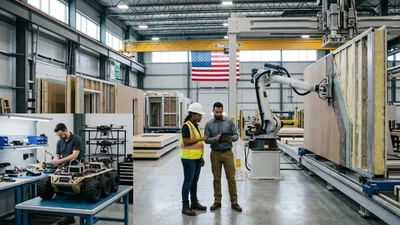
The Reshoring Paradigm | Private capital, seeking stability over political rhetoric, is independently funding the rebuilding of domestic industrial capacity to mitigate geopolitical risk. |
The Iron Law of Economic Sovereignty
From the perspective of a pro-market investor, an economy cannot be genuinely strong if the state it supports is fundamentally vulnerable. In the cold geometry of global power, economic policy and national security are entirely inseparable. A great economic leader does not view the market as a social laboratory, but as a strategic fortress, anchored by two non-negotiable pillars:
1. Energy Dominance as a Geopolitical Weapon
Energy is the foundational input of all human advancement. To restrict domestic extraction of oil and natural gas in the name of regulatory idealism is to voluntarily surrender America’s greatest competitive advantage. True economic leadership treats energy independence not merely as an industrial metric, but as an impenetrable shield. When the United States is the swing producer of the global energy market, it lowers the baseline cost of domestic manufacturing, insulates citizens from external shocks, and starves foreign adversaries of leverage.
2. Supply Chain Autarky and Intellectual Property
A booming stock market is a fragile facade if the advanced semiconductors, critical pharmaceuticals, and aerospace components that power it are dependent on the whims of hostile foreign actors. Real growth is secured only when the regulatory and tax environment makes it undeniably lucrative to invent, build, and defend intellectual property within our own borders. Reshoring heavy industry and securing critical supply lines is the true synthesis of commercial vitality and sovereign defense.
"A nation that depends on its rivals for its critical technology can command neither its economic destiny nor its military security."
The Ultimate Premium
When evaluating the economic legacy of a presidency, the sophisticated investor disregards the daily noise of the ticker tape and the seasonal distortions of the jobs report. Those are merely weather patterns.
Look instead at the institutional climate. The true measure of an executive is whether they left the nation's currency stronger, its regulatory burdens lighter, its energy supply more secure, and its private capital more liberated to do what it does best: innovate, build, and conquer the future. When Washington has the wisdom to step back, American enterprise wins every single time.