When I founded my first company, Kenne Sport, in 1988, innovation meant creating a better physical product and out-hustling the competition. Over the nearly four decades since, the one constant has been the relentless, compounding pace of technological change. Today, from my vantage point here in Jacksonville, I am watching a fundamental rewrite of the rules of innovation.
At 68, I can tell you that the next ten years won't just introduce new software applications; they will introduce programmable biology, limitless energy, a silicon workforce, and post-encryption computing. We are entering the era of "deep tech"—scientific breakthroughs designed to solve our hardest physical, computational, and biological problems.
Just like reading the court in a grueling tennis match or anticipating a play on the soccer field, successful venture investing right now requires looking ahead and positioning yourself where the ball will be three moves from now. Here is a look at the four frontier technologies that will define the 2030s, and the playbooks for getting your capital involved.
Four Themes Defining the Next 10 Years
1. Agentic AI and the Silicon WorkforceWe are shifting from AI as an "assistant" to AI as an "agent." Soon, you won't just ask a model to draft a document; you will deploy an agent to autonomously research a market, negotiate terms, and execute transactions. Agentic AI is currently the fastest-scaling trend in the deep tech ecosystem. As AI enters the physical world through robotics and autonomous systems, the companies building the intelligent software for these machines will upend traditional enterprise models and create a new class of multi-billion-dollar companies.
2. Hyperscale Compute and the Nuclear RenaissanceThis new silicon workforce requires staggering amounts of power. The explosive compute demands of AI data centers are pushing our current grids to the breaking point and driving a rapid surge in global energy demand. The only viable solution to this energy bottleneck is a nuclear renaissance. We are tracking massive advancements in next-generation nuclear technology, specifically small modular reactors (SMRs). The venture returns here won't just come from the reactor manufacturers, but from the entire supply chain of advanced materials and infrastructure required to bring them online.
3. The Bio-Digital Convergence: Programmable LifeWe have moved from mapping the human genome to actively editing it. We are now seeing the rise of "base editing," which allows scientists to rewrite single letters of DNA to cure genetic diseases at their root. Beyond therapeutics, the ability to predict and alter complex biological traits is unlocking programmable biology. The companies building the computational models and delivery mechanisms for these breakthroughs will be the biotech titans of the next decade.
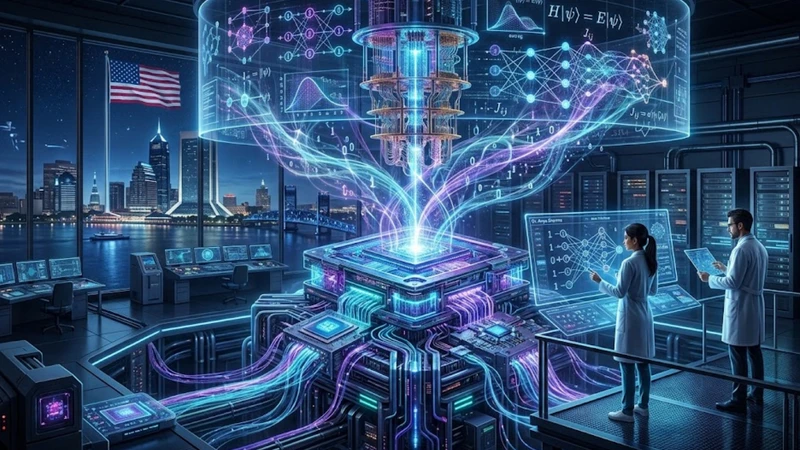
4. Quantum Utility and the Post-Encryption WorldFor years, quantum computing has been stuck in the lab—impressive, but too error-prone for commercial use. That is changing rapidly as we move toward fault-tolerant systems. Within the next decade, we will achieve "quantum utility," where these machines can solve specific problems exponentially faster than classical supercomputers.
But there is a massive catalyst driving capital here: the threat to global cybersecurity. When quantum computers scale, they will break the encryption that protects the world's financial systems. The immediate venture opportunities aren't just in building the massive quantum hardware, but in the "picks and shovels"—specifically, the race to develop and deploy post-quantum cryptography (PQC) across enterprise networks.