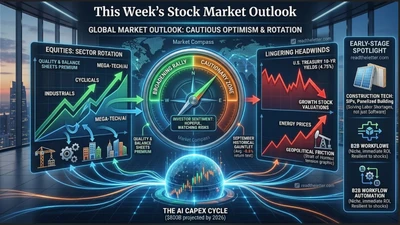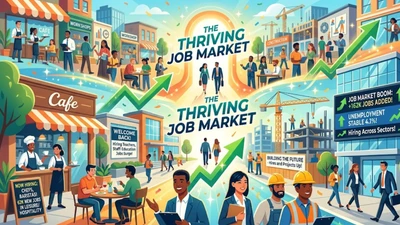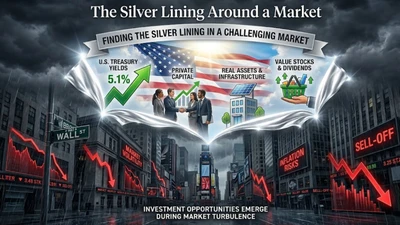
This could be one of those weeks where the headline number on the S&P 500 tells only half the story.
Investors are walking into a packed stretch of monetary policy decisions, consumer data, housing numbers and global market signals at a time when oil prices and Treasury yields are already applying pressure beneath the surface.
The Federal Reserve will command most of the attention, but focusing exclusively on the Fed would be a mistake.
Here are the five things investors should be watching this week.
1. The Fed Takes Center Stage
The Federal Open Market Committee meets Tuesday and Wednesday, with its policy decision scheduled for Wednesday afternoon.
That alone makes this one of the most important trading weeks of September.
The immediate question will be whether policymakers believe inflation requires another dose of monetary restraint. But the actual rate decision may not be the most important part.
Investors should pay close attention to the Fed's updated economic projections and, more importantly, what policymakers communicate about the path ahead.
The market wants clarity.
Are rates likely to remain elevated for longer? Is inflation still the Fed's dominant concern? How much weight is the central bank putting on economic growth and employment?
Those answers could matter more for asset prices than a single quarter-point move.
Growth stocks, small caps, real estate and other interest-rate-sensitive investments could react sharply to any meaningful change in expectations.
2. The Consumer Gets Another Checkup
Before investors even hear from the Federal Reserve Wednesday afternoon, they will receive another important piece of the economic puzzle.
August retail sales are scheduled for release Wednesday morning.
This number matters because the American consumer remains one of the most important pillars supporting economic growth.
July retail sales declined from the prior month, making the August report particularly important.
There are two competing risks.
A surprisingly weak report could raise concerns that consumers are beginning to pull back under the weight of higher borrowing costs and elevated everyday expenses.
A very strong report, however, could reinforce concerns that demand remains strong enough to keep inflation elevated.
In other words, we are still operating in a market where good economic news can occasionally become bad market news.
The sweet spot is resilience without overheating.
3. Watch Bonds as Closely as Stocks
The stock market gets the headlines.
The bond market may tell us what actually matters.
Treasury yields have climbed sharply, with the 10-year yield recently pressing toward the 5% level as inflation concerns, energy prices and expectations for monetary policy tighten financial conditions.
That matters because higher long-term yields compete directly with stocks.
When investors can earn an attractive return in government bonds, expensive equities have to work harder to justify their valuations.
Higher yields also ripple through mortgages, corporate borrowing, auto loans, commercial real estate and business investment.
This week, investors should watch the bond market's reaction to the Fed rather than simply the stock market's first move.
If stocks rally but Treasury yields continue climbing, that could be a warning that the underlying pressure has not disappeared.
If yields stabilize or retreat, risk assets could receive some breathing room.
4. Housing Will Show Us What Higher Rates Are Really Doing
Thursday brings another useful economic stress test with August housing starts and building permits.
Housing is one of the clearest places to see the real-world impact of elevated interest rates.
The week's earnings calendar adds another interesting piece of information, with major homebuilder Lennar scheduled to report Wednesday.
Investors should look beyond the headline housing numbers.
Watch new construction activity, builder commentary, buyer incentives and affordability.
If homebuilders can continue moving inventory despite expensive financing, it would reinforce the argument that parts of the American economy remain remarkably resilient.
If demand begins deteriorating meaningfully, it may indicate that higher financing costs are finally creating deeper economic friction.
5. Don't Ignore Oil, AI and the Rest of the World
Some of the week's biggest market risks may have nothing to do with scheduled U.S. economic reports.
Energy prices have surged amid continued geopolitical uncertainty, while AI-linked stocks have come under renewed pressure and Treasury yields have moved higher. Those forces were already weighing on markets as the week began.
Oil deserves particular attention.
Higher energy prices don't simply affect energy companies. They influence transportation, manufacturing, consumer spending and inflation expectations.
There is also an important international catalyst arriving late in the week.
The Bank of Japan meets Thursday and Friday, giving global investors another major monetary-policy decision to digest.
Changes in Japanese rates can affect currency markets and global capital flows, which can ultimately spill into U.S. Treasury yields and equities.
The Signal Beneath the Noise
This is not necessarily a week for trying to predict every tick in the market.
It is a week for watching relationships.
Watch stocks versus bonds.
Watch growth stocks versus industrials and value.
Watch consumer spending versus inflation.
Watch housing versus borrowing costs.
And watch whether market strength begins broadening beyond the handful of companies and themes that have carried much of the enthusiasm.
The most important question may not be whether the market finishes the week higher or lower.
It may be why it moved.
If yields stabilize, the consumer remains resilient and the Fed avoids significantly increasing fears of prolonged tightening, investors may find reasons to look through the current volatility.
But if oil keeps climbing, yields push materially higher and economic data begins deteriorating at the same time, the market will have a much harder puzzle to solve.
For investors, this week's playbook is simple:
Don't chase the headline.
Watch the signals underneath it.