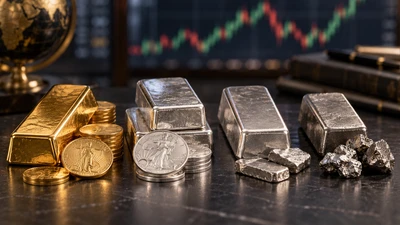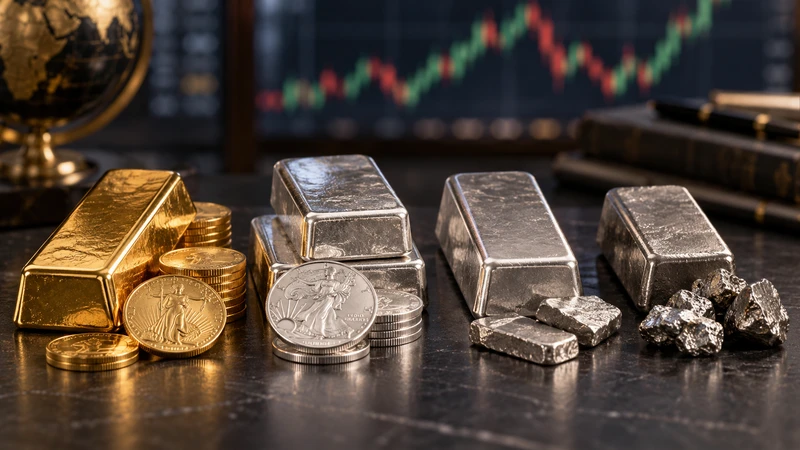
Precious metals have already given investors a wild ride in 2026. Gold has moved from record territory into a sharp correction and back toward the mid-$4,000s, while silver has been even more volatile. Now, with the final months of the year approaching, the question is not simply whether precious metals will rise. The better question is which metals offer the best combination of protection, upside and risk.
My conclusion is fairly simple: I remain constructive on precious metals, but I would not treat the four major metals as interchangeable. Gold is the portfolio anchor. Silver offers more upside but more volatility. Platinum is the interesting contrarian play. Palladium is the one I would keep smaller unless the fundamentals change.
The pullback does not necessarily break the bull case
Gold is currently being pressured by something that normally works against precious metals: higher interest-rate expectations. Oil prices have surged, inflation expectations have risen and Treasury yields have moved higher. Reuters reported today that spot gold was around $4,290 an ounce after falling to its lowest level since early August. Higher yields and a stronger dollar increase the opportunity cost of owning a metal that does not pay interest.
That sounds bearish — and in the short term it can be. But there is another side to the equation. Central-bank demand, investor diversification and concerns about currencies, debt and geopolitical risk continue to provide structural support for gold. The London Bullion Market Association's August snapshot put gold around $4,500 at year-end, while Wells Fargo has maintained a $4,900 year-end target. JPMorgan's more conservative forecast is about $4,500 for the fourth quarter.
In other words, the professional forecasts are wide, but the center of gravity remains above today's price. That is important.
Silver may have the bigger percentage move
Silver is where things get more interesting for an investor willing to tolerate larger swings. Silver is both a monetary metal and an industrial metal. That gives it two demand engines — investment demand on one side and industrial uses on the other.
The trade-off is volatility. Silver can fall much faster than gold when investors get nervous, but it can also outperform dramatically when precious-metals momentum returns. JPMorgan has recently projected silver around $60–$65 over its outlook horizon, while Commerzbank has maintained a much more aggressive $80 year-end target. Some metals analysts are even more bullish.
I would not be surprised to see silver outperform gold on a percentage basis during a renewed year-end metals rally. I also would not be surprised to see silver fall 10% or 15% along the way. That is simply the nature of the metal.
Platinum deserves more attention
Platinum is the metal I think many investors overlook. It does not have gold's monetary status or silver's broad retail following, but its supply fundamentals and industrial uses can produce powerful moves when the market turns.
JPMorgan has put platinum around $1,800 an ounce toward the end of 2026, with supply-side issues — particularly in South Africa — supporting the longer-term case. That makes platinum an interesting diversifier rather than simply another version of a gold position.
Palladium is the weakest of the four
Palladium is more complicated. It has significant industrial exposure, particularly to automotive catalysts, and therefore does not have the same defensive characteristics as gold. JPMorgan's year-end estimate is around $1,350 an ounce.
That does not mean palladium cannot rally. It means I would not make it a major part of a precious-metals allocation unless I had a specific thesis about automobile demand, supply disruptions or substitution trends.
My year-end view
| Metal | Year-end range I would watch | Role |
| Gold | $4,500–$5,000 | Core protection / anchor |
| Silver | $70–$85 | Higher-upside growth |
| Platinum | $1,600–$1,900+ | Contrarian diversifier |
Palladium | $1,100–$1,400 | Speculative / smaller position |
These are my working ranges, not promises or precise price targets. Markets have a way of making confident forecasts look foolish.
The bigger point is that I would rather own a balanced basket of metals than try to guess the exact winning metal. If gold protects the portfolio, silver provides torque, platinum provides diversification and palladium provides optionality, the combination can be more resilient than any single-metal bet.
And I would keep one thing in mind: precious metals do not need to go straight up to make a good investment. A pullback caused by higher rates can actually create a better entry point if the longer-term drivers remain intact.
For me, the setup into year-end is therefore bullish — but disciplined bullish. I would buy weakness rather than chase strength, and I would diversify across the metals rather than assume gold will do all the work.