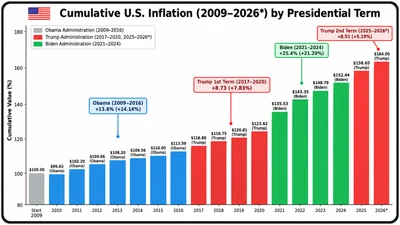
This morning’s CPI report delivered a message markets understand well: inflation is no longer spiraling, but it hasn’t been fully subdued either. Prices continue to rise at a controlled, predictable pace — a far cry from the volatility of recent years — yet still above the Federal Reserve’s stated 2% target.
For investors, this kind of report is deceptively important. It doesn’t shock the system, but it quietly shapes expectations about rates, growth, and policy for months to come.
A Calmer Inflation Picture — With Limits
The latest CPI data confirms that inflation has cooled meaningfully from its peak. Core measures show no signs of re-acceleration, which should reassure markets that the worst of the inflation surge is behind us. At the same time, progress toward the Fed’s target remains uneven. Shelter and food costs continue to exert pressure, reminding households and businesses alike that inflation hasn’t fully disappeared from daily life.
This is the kind of environment that rewards realism. Inflation is no longer an emergency, but it is still a constraint — and that distinction matters greatly for capital allocation.
The Republican, Pro-Growth Interpretation
From a Republican investor perspective, today’s CPI reinforces a long-held view: inflation is now manageable, and growth should be the priority.
At this stage of the cycle, elevated interest rates pose a growing risk of doing more harm than good. Capital formation, business investment, and expansion all depend on confidence that borrowing costs will eventually normalize. With inflation no longer surging, many pro-growth investors see room — and justification — for a more accommodative policy stance.
The focus, from this lens, shifts away from emergency tightening and toward fundamentals: domestic energy production, regulatory discipline, and policies that encourage private investment rather than expand government spending. Markets don’t require flawless data — they require clarity and consistency.
Inflation isn’t defeated — but it’s controlled enough to stop suffocating growth.
What This Means for Investors
In practical terms, this CPI print supports a steady, disciplined approach. Equity markets tend to respond well when inflation is predictable, particularly in sectors tied to domestic growth and real economic activity. Industrials, energy, financials, defense, and U.S.-based manufacturing continue to benefit from this backdrop.
In fixed income, the message is more nuanced. While inflation has cooled, it remains high enough to caution against aggressively extending duration. Yield remains attractive, but patience is warranted as markets wait for clearer signals from the Fed.
Real assets continue to play a role as well. Persistent shelter costs underscore why well-capitalized real estate operators and efficiency-focused builders remain relevant in portfolios. And in a world where policy uncertainty hasn’t vanished, cash still offers something investors often underestimate: optionality.
Looking Ahead
The next phase of the market won’t hinge on a single CPI report. It will be shaped by how policymakers respond to a world where inflation is controlled, but not cured. Fed language over the coming weeks — especially around timing and conditions for rate cuts — will matter more than any headline number.
This morning’s CPI didn’t change the game.
It clarified the terrain.
The Letter Takeaway
Markets reward discipline, not narratives. CPI matters — but what policymakers do next matters more.
— The Letter