Navigating a "Higher for Longer" Market Plateau
Context: Market Intelligence Report
As we cross into the second half of 2026, the macroeconomic landscape has shifted into a clearer but highly disciplined phase. The market narrative is no longer about predicting a dramatic sequence of interest rate cuts; instead, it is about navigating a high-altitude plateau where resilient corporate earnings are going toe-to-toe with sticky, energy-bunted inflation.
From a conservative, pro-business perspective, this same market data is viewed through a lens that emphasizes supply-side economics, deregulation, structural accountability, and a deep skepticism of lingering legacy policies. When we filter today’s conditions into a production-first narrative, three distinct themes dominate the horizon:
1. The Fed: A Welcome Return to Market Accountability
The confirmation and swearing-in of Federal Reserve Chair Kevin Warsh this past May was highly cheered by sound-money advocates and market-focused economists.
- The "Markets Man" Approach: The conservative take celebrates Warsh not as a career academic, but as someone with practical market experience who favors real-time financial data over rigid, backward-looking econometric forecasting models.
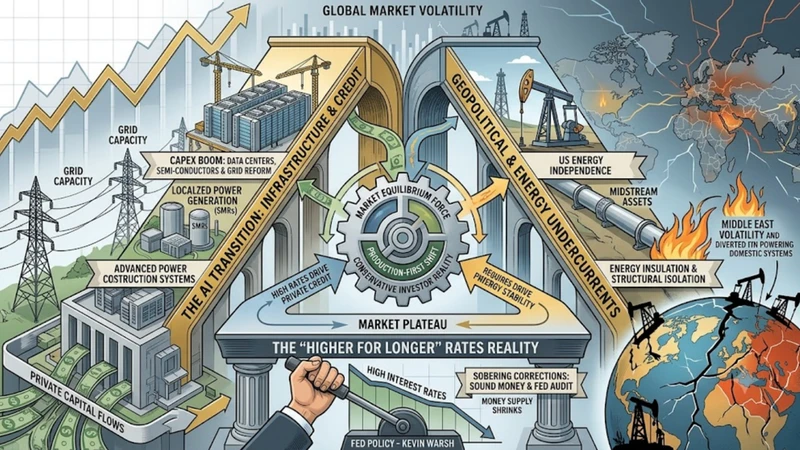
- A Leaner Framework: In his early press conferences, Warsh has already initiated task forces to critically evaluate the Fed's inflation metrics and its massive balance sheet footprint. The "higher for longer" rate reality is not seen as an economic failure, but as a necessary, sobering corrections period to drain excess liquidity. To a conservative investor, true inflation relief won't come from fine-tuning interest rates—it requires aggressive federal spending restraint to counter structural deficits.
2. Capital Expenditure vs. Government Subsidies
From a supply-side viewpoint, the current economic growth (projected around a solid 2.2% GDP) is being driven by the right kind of engine: private sector capital investment rather than federal deficit spending.
- The Infrastructure Cycle: The massive expansion in AI, data center construction, and grid infrastructure is a pure private-sector capex cycle. It serves as a validation of supply-side principles—specifically the deregulation and full expensing of capital investments that allow businesses to build physical capacity. This heavy spending is acting as a major stabilizer for corporate earnings, trickling down favorably into the Industrials, Materials, and Utilities sectors.
3. Domestic Energy Independence as a Geopolitical Shield
With crude oil prices sitting on a plateau around the mid-to-high $80s due to ongoing friction in the Middle East, the structural fragmentation of global trade continues to favor the United States.
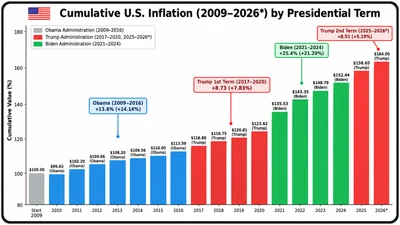
- The Insulation Play: The fact that US large-caps are outperforming international peers is seen as proof of the structural power of American energy insulation and domestic manufacturing capability. Conservative policy advocates argue that the fastest way to break the back of sticky core inflation (currently running near 3.4%–3.6%) is to completely unleash domestic oil and gas production, which naturally reduces production and transportation costs across every single sector.
Policy Spotlight: The Regulatory Rollback & Energy Dominance Push
As the legislative session progresses through mid-2026, this supply-side thesis is rapidly translating into concrete policy action on Capitol Hill. For investors looking to capitalize on domestic infrastructure insulation, the ongoing push for energy deregulation and grid structural reform has created clear, actionable momentum. Tactical allocators should monitor three critical policy dynamics unfolding right now:
1. The Realignment of Federal Energy Appropriations
The final passage of the FY 2026 Energy and Water Development funding bill marks a profound structural pivot away from heavily subsidized, intermittent clean-energy experiments toward rock-solid baseload power.
- The SMR Tailwinds: Congress has aggressively reprogrammed over $5 billion in previously unspent, legacy infrastructure funds. A massive $3.1 billion slice of that capital has been redirected into the Office of Nuclear Energy to accelerate the Advanced Reactor Deployment Program and fund Gen3+ Small Modular Reactors (SMRs).
- Supply Chain Insulation: The same bill allocates hundreds of millions specifically to reinforce the domestic supply chain for heavy grid components, while mandating that the newly branded Office of Energy Dominance Financing prioritize projects expanding the domestic supply of critical minerals.
2. Midstream Infrastructure Protection
Pipeline infrastructure remains the lifeblood of American energy dominance, and the regulatory environment is tilting heavily toward structural asset protection.
- The Pipeline Safety Authorization Act: Moving decisively through the House Energy Subcommittee, this critical framework provides the Pipeline Materials and Safety Administration (PHMSA) with robust funding but couples it with a strict mandate: cost-benefit analyses must remain strictly focused on domestic safety and efficiency, stripping away the overreaching, climate-focused red tape that previously bogged down pipeline expansions. For midstream operators, this means a faster path to execution and predictable project timelines.
3. The Data Center "User-Pays" Grid Reform
The massive, power-hungry footprint of AI data centers is forcing a common-sense regulatory reckoning regarding who pays to beef up the nation's bulk power system.
- The Ratepayer Protection Act: This incoming piece of legislation establishes a clear "user-pays" framework for massive commercial loads. It mandates that large-load entities (like hyper-scale data centers) cover the full incremental costs of any generation, transmission, or distribution upgrades required to serve them.
- The Supply-Side Benefit: While this shifts the capital burden back onto tech developers, it creates a highly predictable environment for the utilities and grid component manufacturers executing the buildouts, separating standard consumer utility risk from heavy industrial infrastructure demand.