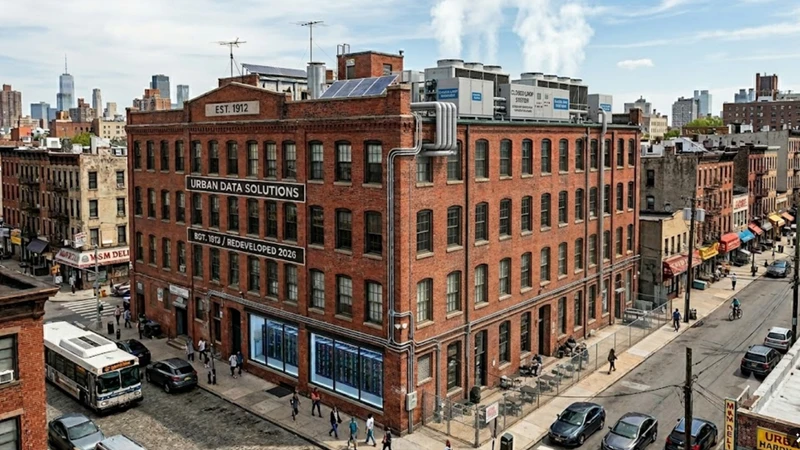
How integrating hyperscale data centers into depressed urban landscapes and closed-loop ecosystems solves the AI power crisis while revitalizing American communities.
Published by: readtheletter.com | Analysis Focus: Alternative Infrastructure & Asset Allocation | Date: June 2026
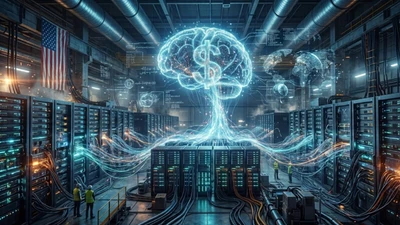
The modern gold rush is measured in megawatts and liters. As artificial intelligence, agentic workflows, and large-scale enterprise architectures scale exponentially, data centers have evolved from modest server closets into industrial-scale power plants of information. This rapid expansion has pushed the American electrical grid and regional water tables to their thresholds, triggering a critical tension between digital progress and localized resource scarcity.
Building massive greenfield complexes on prime agricultural land or encroaching on strained suburban municipal networks is an unsustainable path forward. True innovation requires an alternative framework: an industrial renaissance where hyperscale data centers are seamlessly integrated into the existing built environment, utilizing distressed assets, closed-loop technical systems, and non-traditional land to fuel the next generation of American computing.
Adaptive Reuse: Integrating Assets into Depressed Urban Areas
Rather than claiming pristine rural or high-value commercial land, the smart expansion of digital infrastructure looks backward to move forward. America's post-industrial landscape is filled with structurally sound, decommissioned assets: abandoned automotive assembly plants, historic textile mills, and vacant multi-story department stores in depressed urban cores.
These legacy structures possess unique architectural characteristics that align remarkably well with modern hyperscale specifications:
- High Load-Bearing Floors: Former heavy industrial facilities and brick-and-mortar warehouses were constructed to support massive machinery, making them perfectly suited for the intense weight configurations of high-density AI server racks.
- Substantial Right-of-Way and Proximity to Legacy Power: Old industrial hubs were intentionally positioned along robust logistical corridors and historical high-voltage grid lines, simplifying the process of securing specialized power drops.
- Urban Heat Sink Abatement: Repurposing vacant downtown structures avoids creating new concrete footprints, mitigating urban sprawl while breathing economic vitality back into economically challenged municipal zones.
Radical Energy Optimization: Beyond Traditional Efficiency
Minimizing the Power Usage Effectiveness (PUE) ratio requires moving away from traditional mechanical air chilling. Modern enterprise chips operating high-intensity workloads require a multi-faceted approach to energy conservation:
1. Direct-to-Chip Liquid Cooling
Liquid possesses a thermal carrying capacity more than 3,000 times greater than air. By circulating dielectric fluids or treated water loops directly across the server’s hot plates, operators can safely run higher thermal profiles. This eliminates the need for massive, power-hungry industrial HVAC fans, directly reducing auxiliary electricity consumption.
2. Co-Location with District Thermal Networks
Instead of treating server exhaust heat as waste to be expelled, smart integration turns data centers into local thermal providers. By routing the warm water loops generated by server blocks into municipal district heating systems, the facility can provide baseline heating to adjacent residential complexes, commercial offices, or public greenhouses, creating a highly efficient symbiotic relationship.
3. Intelligent Agentic Grid Workloads
Leveraging agentic AI frameworks allows data centers to actively balance their compute loads based on real-time grid conditions. Non-urgent background processing, LLM training sequences, and historical data indexing can automatically migrate to hours when regional solar or wind generation peaks, transforming the data center into a dynamic asset that smooths out grid volatility rather than exacerbating it.
Circular Water Management: Reaching Net-Zero Consumption
Water is the silent constraint of the digital economy, with traditional evaporative cooling systems pulling millions of gallons daily from local aquifers. Reaching true sustainability demands a closed-loop approach that treats water as a recurring asset rather than a consumable resource.
Implementing closed-loop dry cooling systems completely isolates the primary cooling fluids, recirculating them through air-cooled heat exchangers. When supplemental cooling is required, facilities can utilize non-potable municipal graywater or treated industrial wastewater rather than tapping into regional drinking water systems. Advanced on-site filtration ensures that any moisture discharged from the facility meets strict environmental purity standards, returning safely to local watersheds.
The Path Forward
The integration of high-density computing into America's built landscape represents a profound shift in asset development. By shifting the deployment strategy away from greenfield consumption and toward urban adaptive reuse, the investment community can safely expand technical capacity. Maximizing circular resource workflows ensures that the digital economy grows in lockstep with sustainable, resilient American communities.