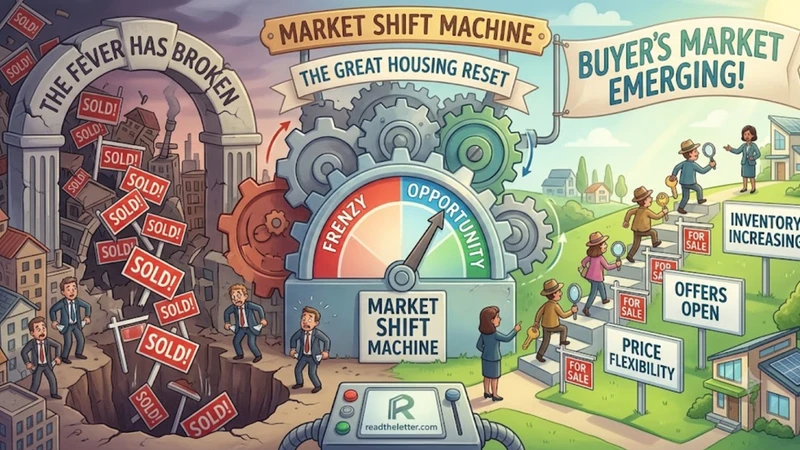
Welcome back to The Letter. If you’ve been waiting for the housing market to finally pick a direction, the latest data from the first half of 2026 is signaling a massive vibe shift.
For the last few years, the real estate market has felt like a rigged game of musical chairs where regular buyers were always left standing. But as we look forward to the next few quarters, the board is being reset. From shifting political winds in Washington to a quiet changing of the guard between buyers and sellers, here is the forward-looking quarterly housing report you need to read.
The Squeeze on Corporate Landlords
Let’s start with the elephant in the room: politics. The pushback against Wall Street buying up Main Street is gaining serious bipartisan momentum, and Trump is leaning hard into a populist housing message: corporations need to stop hoarding starter homes.
When institutional investors (think massive private equity funds) buy up entry-level inventory, they artificially squeeze supply and box out first-time buyers. The political pressure is mounting to strip tax incentives from mega-landlords or outright cap their single-family home purchases.
The investor takeaway: If policy forces institutional money to pull back, we will see a sudden influx of entry-level inventory hit the market. If you are a mom-and-pop real estate investor or a first-time homebuyer, Wall Street’s regulatory headache is your buying opportunity.
Sellers Are Finally Sweating (But Demand Isn’t Dead)
For the first time in recent memory, the market is decisively softening for sellers. The days of listing a home on a Friday with blurry iPhone photos and getting waived inspections by Sunday are over. As of the end of Q2 2026, the data paints a clear picture:
- Inventory is normalizing: Total single-family inventory has crept up over the last two quarters, with months of supply crossing the 5.0 mark — shifting us into neutral, borderline buyer-friendly territory.
- The Condo Market is Cracking: While single-family homes are holding steady, the condo market has officially flipped to a buyer's market. With over 6 months of inventory and price cuts accelerating, sellers of attached homes are feeling the heat.
- Prices are stalling, not crashing: J.P. Morgan predicts national home prices will stall at 0% growth for the year. Buyers are no longer desperate; they are disciplined. Sellers who price based on peak-mania are watching their listings rot on Zillow.
The Under-the-Radar Indicators Changing in 2026
If you want to know where the market is really heading, stop staring at the median home price. Here are the leading indicators the pros are watching right now:
- Builder Buydowns over Price Cuts: Don't just look at the final sale price; look at what builders and sellers are giving up to get it. Homebuilders are aggressively offering mortgage rate buydowns of 1% to 2% to move new construction inventory without slashing top-line prices. A market where concessions are rising is a buyer's market in disguise.
- Net New Listings vs. Contract Volume: Despite inventory growing, net new listings actually fell in Q2. This means the market is absorbing the existing backlog of homes rather than expanding. Demand is still resilient, even if buyers are taking their time.
- Brokerage Balance Sheets: Home prices can stay artificially high on low volume, but brokerages survive on transactions. Keep an eye on quarterly earnings of major real estate firms; if you see major layoffs, it signals the "lock-in effect" is still suffocating the market.
The Bottom Line
We are transitioning from a momentum market to a fundamentals market. The frenzy is dead, but the underlying desire for homeownership isn't. Keep your eyes on the political crosshairs aimed at corporate buyers, watch the concession data, and negotiate hard.
The next few quarters belong to the patient.
Enjoy this breakdown? Subscribe to readtheletter.com for insights on the markets, real estate, and the trends shaping your wealth.