The S&P 500 recently broke above 7,300, giving us a six-week winning streak that feels a bit like celebrating a home run while the stadium is on fire [1]. As we head into the week of May 11, the market is sitting on a knife’s edge. For those of us who prefer our portfolios grounded in reality rather than wishful thinking, this week brings a convergence of inflation data, a changing of the guard at the Federal Reserve, and geopolitical headaches that demand a defensive, clear-eyed posture.
Here is what you need to watch, and more importantly, what you need to ignore.
The Fed Transition: Meet the New Boss
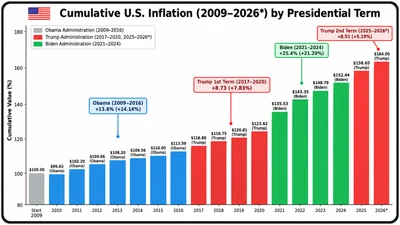
The most significant domestic catalyst this week is Tuesday’s April Consumer Price Index (CPI) release. Consensus expects headline CPI to rise 0.6% month-over-month and 3.7% year-over-year [1]. If that print comes in hot, you can kiss those rate-cut fantasies goodbye.
Adding to the drama is the impending transition at the Federal Reserve. Jerome Powell’s term ends on Friday, and the Senate is expected to vote this week to confirm Kevin Warsh as his successor [1] [2].
Warsh is generally viewed as more market-friendly, but let’s not kid ourselves: the Fed is trapped by the data. Recent FOMC meeting dynamics suggest that a rate cut remains unlikely without significantly softer inflation numbers [1]. Warsh might have a different mandate, but he’s inheriting the same sticky inflation problem. The confirmation process will be a top priority for Senate Republicans this week, setting the tone for the central bank’s direction under the Trump administration [2].“The top priority for Senate Republicans this week will be to confirm Kevin Warsh to be chairman of the Federal Reserve, but much of the week’s work in the Senate will be off the floor, setting the stage for upcoming votes on the budget reconciliation bill.” — Roll Call [2]
The Hormuz Headache and the Energy Premium
Geopolitical risks are sharply elevated, primarily driven by the ongoing conflict between the U.S. and Iran. Over the weekend, Iran responded to a U.S. ceasefire proposal via Pakistani mediators. President Trump, in his signature style, immediately rejected the response as “totally unacceptable” [3].
The central issue for energy markets remains the Strait of Hormuz, through which approximately 20% of global seaborne crude oil passes [3]. The waterway has been effectively closed since February, putting sustained pressure on global oil supply chains. Following the breakdown in ceasefire hopes, oil markets are expected to reprice the war premium higher. Last week, WTI crude exhibited extreme volatility, swinging between $88.66 and $107.46 before settling near $95.42 [3].
For investors, this sustained disruption underscores the strategic importance of the domestic energy sector. High-yielding energy infrastructure companies like Enterprise Products Partners (EPD) and Enbridge (ENB), along with majors like Chevron (CVX), remain attractive defensive plays [4]. When the world gets messy, you buy American energy. It’s that simple.
Trade Policy and the Beijing Summit
Trade policy is back in the spotlight following a May 7 ruling by the U.S. Court of International Trade, which struck down the Trump administration’s 10% across-the-board import tariffs [5]. This legal setback complicates the administration’s trade agenda just as President Trump heads to Beijing for a highly anticipated summit with Chinese President Xi Jinping [6].
The summit, scheduled for May 14–15, aims to address tariffs, artificial intelligence guardrails, and broader security issues [1] [6]. The outcome of these talks could drive significant volatility in semiconductor and technology stocks. The U.S. is trying to balance economic interests with national security concerns, and Beijing knows the recent court ruling creates a temporary window of uncertainty.
Defense Sector: The Ultimate Hedge
The combination of heightened Middle East tensions and strategic competition with China continues to support the investment case for the defense sector. Defense stocks offer a compelling mix of government-linked demand, innovation, and balance-sheet strength [7].
Market activity highlights strong interest in major defense contractors and aerospace companies. Key names to watch include Lockheed Martin (LMT), RTX Corporation (RTX), Boeing (BA), and GE Aerospace (GE) [7]. These companies are well-positioned to benefit from long-term defense budgets and the ongoing need to replenish and modernize military capabilities. Peace through strength isn’t just a political slogan; it’s a solid investment thesis.
References
- Gotrade: US Market Outlook May 11–15 2026: CPI Is Key. heygotrade.com
- Roll Call: This week: Ballroom fight, Warsh confirmation on the agenda. rollcall.com
- TheStreet: Iran responds to U.S. ceasefire proposal. What next for oil? thestreet.com
- The Motley Fool: My Top 3 Energy Stocks for May 2026. fool.com
- Cato Institute: Federal Court Strikes Down President’s Latest Tariffs. cato.org
- Yahoo Finance: Trump heads to Beijing with tariff uncertainty. finance.yahoo.com
- MarketBeat: Promising Defense Stocks To Add to Your Watchlist — May 9th. marketbeat.com