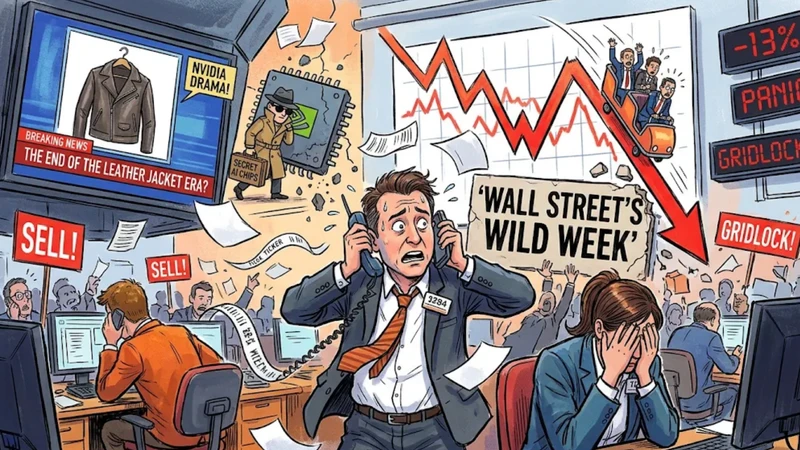
If you spent the last week hoping for a quiet, predictable autumn stroll through your 401(k), Wall Street had a completely different itinerary in mind. Between a decisive midterm shake-up in Washington and a corporate implosion in Silicon Valley that read more like a discarded Cold War spy thriller than a quarterly filing, investors spent the last five trading days nursing severe market whiplash. Let’s break down how a week of promise quickly turned into a masterclass in market chaos.
The Election Hangover: Celebrating Gridlock (Briefly)
It is no secret that Wall Street has an enduring, almost romantic attachment to political gridlock. The comforting belief here is that if politicians are too busy arguing with one another, they won’t have time to pass anything that actually hurts corporate margins.
When the midterm election dust settled and voters handed Democrats control of both the House and the Senate—setting up a classic divided government alongside a Republican White House come January—traders initially popped the champagne. On November 4, stocks surged, oil prices tumbled, and the Dow added 1,500 points in a textbook relief rally.
But as we’ve seen so many times, the euphoria lasted roughly twenty-four hours. By November 5, investors remembered that divided government also means messy fiscal standoffs, debt ceiling brawls, and heightened scrutiny of mega-cap tech. The S&P 500 promptly suffered its worst single-day drop since April 2025, shedding over 4% as traders realized that political stalemate doesn't actually pay for multi-billion-dollar AI data centers. Even everyday retail investors—who have spent the last several years religiously treating every market dip like a clearance sale—suddenly developed a case of cold feet, turning into net sellers for the fourth straight week.
Exit Stage Left: Nvidia’s $490 Billion Soap Opera
Just as the markets were attempting to regain their footing earlier this week, Silicon Valley decided to deliver the plot twist of the decade. On November 12,
While the corporate press releases offered the usual solemn tributes to his "immeasurable contributions" and announced CFO Colette Kress as interim chief executive, the real catalyst was considerably less boardroom-friendly: explosive reports detailing extramarital affairs involving two company employees and an alleged Chinese spy.
For an AI market that had priced in near-perfection—and treated Huang’s signature leather jacket as a load-bearing pillar of the global economy—the reaction was swift. Nvidia shares plunged 13% at Thursday's open before clawing back some ground to close down 4.3%. All told, the scandal erased roughly $490 billion in market value over the week. To make matters worse, lawmakers on both sides of the aisle immediately seized on the national security angle, renewing calls for aggressive new export bans on advanced AI chips to Beijing.
The Scorecard
By Friday, equities were left bruised, Treasury yields were elevated on lingering inflation anxiety, and energy markets were jittery over supply threats in the Middle East. Investors spent the week learning a timeless lesson: fundamentals matter, right up until a geopolitical espionage scandal and an AI valuation check decide to crash the party at the exact same time.