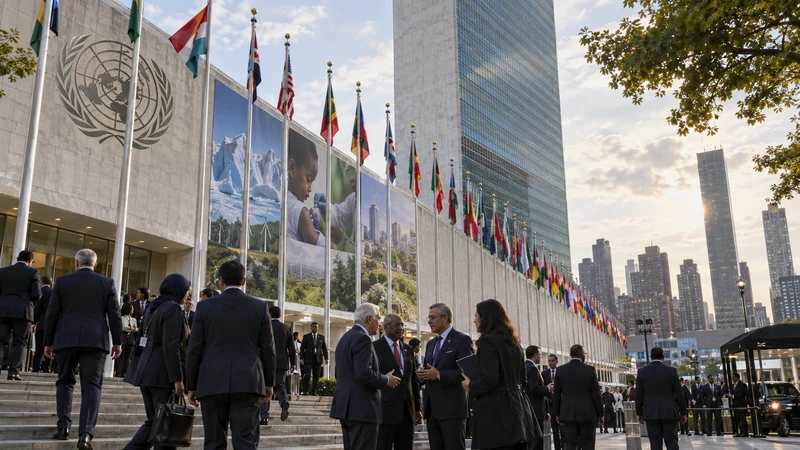
World leaders are gathering in New York this week for the 81st session of the United Nations General Assembly, with the General Debate running from September 22 through September 28. Beyond the speeches, the more important question is what governments actually agree to—and what those commitments could mean once leaders return home.
This year’s gathering comes amid wars, economic uncertainty, international sanctions and continuing disagreements over how much authority global institutions should have in shaping national policy.
The outcomes of UN week are unlikely to come from one sweeping agreement. Instead, they will emerge through diplomatic negotiations, political declarations and private meetings between governments.
War, Security and Diplomacy Take Center Stage
International security is one of the biggest issues hanging over this year’s gathering.
The conflict involving the United States and Iran, renewed fighting in Yemen and continuing tensions involving Israel, Hamas and Hezbollah are already shaping discussions in New York. Gulf governments are also attempting to keep diplomatic channels open between Washington and Tehran.
Ukraine remains another major issue. European officials meeting in New York are debating sanctions on Russia while governments continue searching for a path toward ending the war.
The outcome worth watching is not simply another statement condemning conflict. It is whether private negotiations produce movement on sanctions, ceasefires, security arrangements or future peace talks.
Those decisions could eventually affect military commitments, energy markets, trade and U.S. foreign policy.
Pandemic Preparedness and National Authority
Pandemic preparedness will return to the agenda on September 25.
The General Assembly is scheduled to hold a high-level meeting on pandemic prevention, preparedness and response. According to the UN, the meeting will approve a political declaration that has already been negotiated among member states.
That makes the details important.
International cooperation during a health emergency can involve information sharing, medical supplies, funding and coordination between governments. But after the political battles surrounding COVID-19, questions about national authority, emergency powers and the role of international organizations remain significant.
A UN political declaration does not automatically become U.S. law. The more important question is what commitments governments make and how those commitments are later implemented at home.
Development, Spending and Accountability
Another high-level meeting on September 23 marks the 40th anniversary of the UN Declaration on the Right to Development. The issue centers on economic development and cooperation between wealthier and developing nations.
But international development discussions also raise a basic question: who pays?
When governments commit money to international programs, taxpayers have an interest in knowing how much is being spent, where the money is going and whether those programs are producing measurable results.
That makes accountability just as important as the promises made in New York.
A declaration may sound ambitious on paper, but its real significance depends on whether governments later commit additional funding, create new programs or accept new obligations.
How Much Power Should International Institutions Have?
A broader issue surrounding the summit is the relationship between international cooperation and national sovereignty.
The United Nations provides countries with a place to negotiate and coordinate on global issues. But those governments still answer to their own laws, legislatures and citizens.
That distinction matters.
International agreements and political declarations can influence future policy, but governments still have to determine whether those commitments serve their own national interests and whether domestic law allows them to be implemented.
For the United States, the question is not simply whether an idea receives support at the UN. It is what obligations Washington accepts afterward—and whether Congress or federal agencies would have to take action to carry them out.
The Outcomes Happening Behind Closed Doors
Some of the most consequential developments of UN week may never appear in a formal resolution.
Bringing presidents, prime ministers and foreign ministers together in one city creates opportunities for bilateral and small-group meetings that would otherwise take months to arrange.
Those conversations can involve sanctions, military cooperation, trade, energy, intelligence, humanitarian access and negotiations over ongoing conflicts.
This week, for example, Arab governments have been pushing for discussions between the United States and Iran as part of an effort to reduce tensions. No formal meeting had been announced as of September 22, but the diplomacy surrounding it shows how much activity can occur away from the General Assembly podium.
Public speeches reveal what governments are prepared to say openly.
Private meetings can reveal what they are actually willing to negotiate.
What Happens After the Summit Matters More
The United Nations will produce speeches, declarations and diplomatic commitments throughout the week.
But those announcements are only the beginning.
The bigger questions come afterward:
Which commitments actually become policy?
Which require additional taxpayer funding?
Which affect American security or economic interests?
Which expand international cooperation without changing domestic authority?
And which ultimately amount to little more than diplomatic language?
Those are the outcomes worth watching after world leaders leave New York.