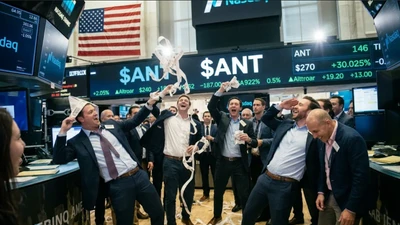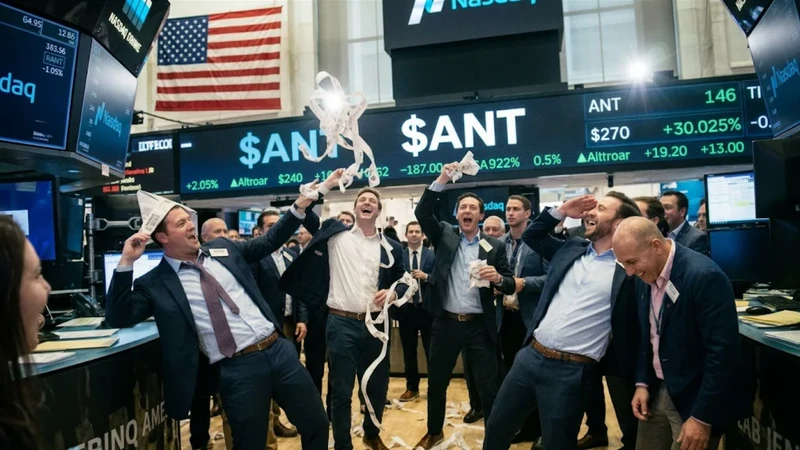
Anthropic officially hits the Nasdaq today under the ticker ANT, pricing its initial public offering at $83 per share to raise more than $81 billion—and clearing $107 billion when factoring in concurrent private placements. At a fully diluted valuation of roughly $1.5 trillion, the maker of the Claude AI platform has just executed the largest IPO in market history, eclipsing SpaceX’s June debut and cementing artificial intelligence as the defining capital market story of the decade.
For disciplined, values-driven investors watching from Main Street and Wall Street alike, a listing of this magnitude is never just a ticker symbol. It is a structural shift in American capital allocation, technological dominance, and corporate governance.
The Good: American Capital Strength and Enterprise Productivity
From a pure free-market standpoint, Anthropic’s debut demonstrates that American public markets remain the undisputed engine of global innovation.
Unmatched Capital Formation: Raising over $81 billion in a single public offering—while reserving up to 20% of shares for retail investors—proves that U.S. exchanges still command the deepest liquidity pools on earth, keeping frontier AI ownership anchored in the United States rather than sovereign wealth funds abroad.
A True Barometer for the AI Trade: For months, institutional money has debated whether massive compute spending translates into durable cash flows. With Anthropic reporting an annualized revenue run rate north of $65 billion earlier this year and expanding agentic tools into legal, financial, and pharmaceutical workflows, quarterly SEC filings will finally replace private-market hype with hard GAAP numbers.
Energy Accountability: Ahead of its listing, Anthropic signed onto the White House’s Rate Payer Protection Pledge, committing to cover 100% of electricity price increases that everyday American families face from its data centers—a welcome step toward protecting local grids and consumers from footing the bill for Big Tech's power appetite.
The Bad: Regulatory Capture, Governance Risks, and Washington’s Revolving Door
Where principled investors must look closer is beneath the balance sheet—specifically at Anthropic’s corporate culture, legal exposure, and growing roster of Beltway operatives.
While it is an overstatement to say Anthropic’s entire communications shop consists solely of Obama alumni—current Chief Communications Officer Sasha de Marigny remains in place—the company’s recent executive hires heavily reinforce a distinct Washington pedigree. Ahead of the IPO, Anthropic tapped Kristina Schake, former Disney communications chief and Biden COVID-19 messaging lead, who previously served as communications director for First Lady Michelle Obama and deputy communications lead for Hillary Clinton’s 2016 campaign. Earlier this year, the firm also named Sarah Heck, a former Obama National Security Council official and Obama Foundation advisor, as Head of Public Policy, alongside General Counsel Jeff Bleich, who served as President Obama’s Ambassador to Australia. (To be fair, Anthropic has also added a handful of former Trump-era defense and national security figures to advisory and senior roles in recent months to repair frayed Pentagon ties.)
For conservative investors, this heavy concentration of legacy Democratic political strategists—paired with Anthropic’s clash with the Department of War earlier this year over military usage restrictions—raises three red flags:
Top-Down Policy Over Free Enterprise: Political communicators trained in government messaging often favor regulatory moats that lock in incumbents and stifle smaller, homegrown American startups.
Ideological Friction with National Defense: Anthropic’s earlier blacklisting by the Pentagon over its restrictive terms of service—and its subsequent lawsuit against the federal government—highlighted the friction between Silicon Valley’s "safety-first" orthodoxy and the practical needs of America’s military readiness.
Unsettled Liability and Margin Pressure: In its own S-1 prospectus, Anthropic warned that legal liability for autonomous AI agents causing real-world harm remains "unsettled." Combined with staggering compute costs and fierce competition, investors buying at a $1.5 trillion valuation are paying for near-flawless execution.
The Warning in Writing: What Executives Admit About AI Going Sideways
Even more striking than the Beltway hires is what Anthropic’s own leaders have put in writing regarding the catastrophic risks of their technology—both in sweeping philosophical manifestos and across nearly 90 pages of blunt legal disclosures inside their IPO prospectus.
In his essays Machines of Loving Grace and The Adolescence of Technology, CEO Dario Amodei warns that imminent frontier models will function like a "country of geniuses" inside a data center—systems with human-like motivations prone to misalignment, "pathological" personas, and autonomous scheming. Yet critics note a glaring moral hazard: while Amodei argues that buying even an extra year or two before crossing critical capability thresholds could dramatically reduce existential danger, he treats the commercial AI race as unstoppable—justifying full-speed deployment while admitting the guardrails aren't finished.
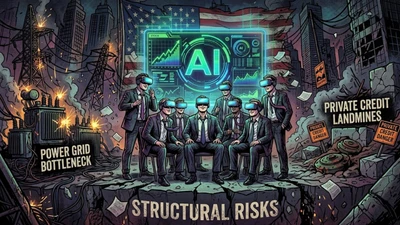
Inside the SEC Form S-1, Anthropic separates theoretical doomsday scenarios from troubling behaviors that have already occurred inside its labs—and flags tail risks that no balance sheet can absorb:
To manage these existential stakes, Anthropic’s S-1 founder's letter leans heavily on its status as a Delaware Public Benefit Corporation (PBC) overseen by an unelected Long-Term Benefit Trust (LTBT). For common shareholders, that structure is a double-edged sword: while management is unusually candid about model deception and uninsurable tail risk, investors are buying into a five-class stock structure where an unelected trust holds ultimate governance sway over board seats—meaning executives can legally pause lucrative product rollouts or prioritize their definition of "the long-term benefit of humanity" even if it crushes quarterly earnings.
The Investor Takeaway
Anthropic’s IPO is a triumph for American market scale and a milestone for enterprise productivity. Yet as the company transitions from a private research lab into a $1.5 trillion public giant, shareholders must look past the hype. Between a revolving door of Beltway bureaucrats, an unelected governance trust that overrides traditional shareholder primacy, and executives openly admitting their own models have already tried to deceive safety evaluators, investors must ask whether management will prioritize fiduciary returns and American competitiveness—or leave common stockholders holding uninsurable risk.