If you look at a global map of oil shipping lanes, the numbers tell a story of abundance.
Every single day, tens of millions of barrels of crude oil move through the world's primary maritime chokepoints: around 20 million barrels through the Strait of Hormuz, over 23 million through the Strait of Malacca, and nearly 8 million through the Strait of Bab el-Mandeb. On top of that, Venezuela holds the largest proven crude reserves on planet Earth—over 300 billion barrels—sitting right in our geopolitical backyard.
Yet, when you pull up to the gas pump, you aren't paying for abundance. You are paying for panic.
Why is there such a massive disconnect between the physical reality of oil floating across our oceans and the exorbitant price per gallon at local gas stations? The answer lies in how energy is priced, who controls the narrative, and how commodity traders have built a high-stakes casino where the house wins every time the world gets nervous.
The Fear Factory: How Traders Capitalize on "Perceived Risk"
To understand why fuel prices spike while tankers are still moving full steam ahead, you have to separate physical oil from paper oil.
Physical Oil: Real tankers carrying physical crude from ports to refineries.
Paper Oil (Futures Contracts): Financial instruments traded on exchanges like the NYMEX or ICE, where hedge funds, financial institutions, and energy traders buy and sell contracts representing future delivery dates.
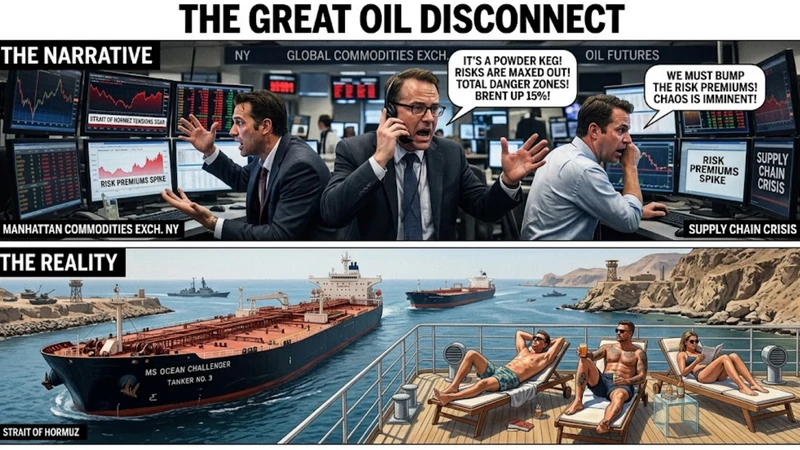
When news breaks of a drone strike near the Red Sea, a naval standoff near Hormuz, or political volatility surrounding Venezuelan production, not a single physical barrel needs to stop flowing for prices to jump.
Instead, Wall Street trading desks and mega-commodity firms (such as Vitol, Trafigura, and Glencore) begin bidding up the price of paper futures. They are pricing in what financial markets call a "Geopolitical Risk Premium." If traders calculate a 15% probability that a chokepoint could be blocked next month, they price that catastrophe risk into today’s crude value.
To the consumer, this feels like an artificial markup—and in practice, it is. Traders profit off volatility and uncertainty. They don't necessarily need a real supply shortage; they just need the fear of one. Through time arbitrage, geographic price differences, and skyrocketing war-risk insurance premiums, trading houses reap record profit margins on the friction caused by perceived threat.
The Venezuelan Variable: Abundance Blocked by Friction
Consider Venezuela. The country sits on reserves that rival Saudi Arabia, yet its actual production hovers at a fraction of its potential—around 1.1 million barrels per day. Years of infrastructure decay, shifting sanction regimes, and geopolitical wrangling have effectively quarantined vast amounts of heavy crude from seamlessly balancing global markets.
Even when access or sanctions ease, bringing heavy Orinoco crude back online at scale requires tens of billions in capital investment, complex refining, and years of buildout. In the meantime, the mere rumor of policy shifts regarding Venezuelan oil becomes another chip for traders to gamble with on the futures market, creating price swings that line corporate pockets while squeezing family budgets.
How the Average American Can Force Change on the Market
It is easy to feel powerless against a multi-trillion-dollar global energy ecosystem. However, commodity markets rely on two factors above all else: demand inelasticity (the belief that you must buy gas regardless of price) and regulatory opacity.
If Americans want to force structural change and bring prices down, action must happen on both the consumer and civic fronts.
1. Smash Demand Inelasticity (The Consumer Leverage)
Traders drive up prices because they assume American consumer demand is fixed. The moment global demand metrics show a dip, speculative bubbles burst rapidly.
Targeted Demand Reduction: Micro-changes scaled across millions of drivers alter market fundamentals. Coordinating work-from-home days, carpooling, utilizing public transport, and consolidating errands directly lowers national fuel consumption metrics.
Fuel Efficiency Practices: Simple maintenance—like maintaining correct tire pressure, reducing idle time, and driving at steady speeds—can improve vehicle fuel economy by 3% to 10%. A collective 5% drop in national gasoline consumption forces refineries to cut prices to move inventory.
2. Demand Speculation Reform & Position Limits
The financialization of oil is what allows pure speculators (who never intend to take physical delivery of a single oil barrel) to drive up prices.
Advocate for Position Limits: Write to congressional representatives demanding strict enforcement of speculative position limits by the Commodity Futures Trading Commission (CFTC). Limiting the volume of energy contracts non-commercial hedge funds can hold prevents artificial price spikes driven purely by paper trading.
Push for Transparency in Private Energy Trading: Support legislation requiring private trading houses to disclose physical holdings and short-term arbitrage positions, reducing their ability to exploit information asymmetries.
3. Support Domestic Refining and Supply Infrastructure Transparency
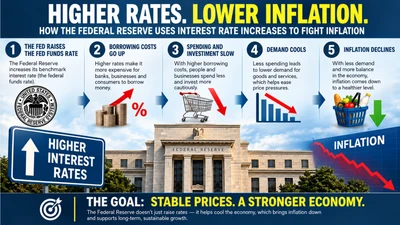
Crude oil prices are only half the battle at the pump; the other half is refining capacity (the "crack spread").
Push for Refiner Oversight: Urge policymakers to investigate refining capacity bottlenecks and profit margins. When crude prices fall but gas prices stay high, refiners are often capturing the margin. Public accountability forces quicker price drops at the pump when crude costs decrease.
The Bottom Line
The global oil market operates on a mechanism where perception dictates reality, and speculative fear costs working families real money. By understanding that gas prices are driven by financialized risk premiums rather than absolute supply shortages, Americans can move from passive consumers to active market disruptors—demanding financial regulation, altering demand patterns, and refusing to fund the profits of panic.